

By Clement Wasike
The cumulative effect of journeys inspired by conferencing is staggering but economically impactful. Business events in 2025 brought together 1.65 billion participants across 180 countries. That movement generated US$1.3 trillion in direct spending, a figure that exceeded the direct output of global aerospace and air transport combined.
Clearly, the Meetings, Incentives, Conferences and Exhibitions (MICE) sector is no longer a peripheral tourism niche. It is a formidable economic force. When indirect and induced activity is accounted for, business events contributed US$1.8 trillion to global GDP and sustained 24.2 million jobs worldwide in 2025. The market itself is valued at approximately US$1.05 trillion, with forecasts projecting growth to US$1.14 trillion in 2026 at a compound annual rate of 8.4 per cent.
Each business event participant generates an average of US$785 in direct sales, feeding airlines, hotels, transport providers, food suppliers and a network of local enterprises. The multiplier effect is pronounced with every dollar of direct business event spending generating an additional US$1.37 in indirect and induced expenditures throughout the economy.
Delegates spend more than leisure tourists and stay longer. In New Zealand, international conference attendees spent NZ$645 per day while attending events, exceeding the daily expenditure of typical holidaymakers. In Helsinki, the average congress participant spends €2,000 in the host country-. Such figures explain why cities invest heavily in convention infrastructure and bidding strategies.
The employment impact of MICE is equally significant. Business events directly supported 9.7 million jobs globally in 2025, with total employment—including indirect and induced roles—reaching 24.2 million. Oxford Economics forecasts direct employment will climb to approximately 10.4 million by 2028. These are not merely hospitality positions. They encompass event management, logistics, translation, technology, marketing, creative services and the myriad trades that sustain a functioning conference ecosystem.
Regional dynamics illustrate the sector’s reach. North America led direct spending in 2025 at US$487.7 billion, representing 37.8 per cent of the global total. Asia generated US$352.8 billion, overtaking Western Europe’s US$328 billion. Corporate and business events constituted the largest share of direct spending at US$566 billion, followed by conventions and congresses at US$383.2 billion.
Vienna offers a compelling case study in the tangible returns of strategic investment. In 2025, the city hosted 7,196 congresses and corporate events, generating 2.5 million overnight stays. Meetings held in Vienna contributed €1.7 billion to Austria’s GDP, supported 19,300 full-time jobs and produced €348 million in tax revenue. International congresses alone accounted for €828 million of that GDP contribution.
Africa’s trajectory merits particular attention. The continent’s MICE market is estimated at approximately US$45 billion, with forecasts suggesting growth towards US$85 billion by the early 2030s. While Africa currently accounts for roughly four per cent of the global association meetings market, momentum is building. The continent is no longer content to be a spectator.
The recovery from pandemic disruption has been decisive. By late 2025, request-for-proposal activity had reached 102 per cent of pre-pandemic levels, signalling that organisations have reaffirmed the value of face-to-face engagement. Direct spending is projected to reach US$1.6 trillion by 2028, representing annualised growth of 6.7 per cent.
The implications for Kenya and comparable destinations are clear. MICE tourism is not a discretionary indulgence. It is a strategic pillar of economic diversification, a generator of high-value employment and a conduit for foreign exchange. Destinations that invest in venues, connectivity and coordinated bidding will capture a substantial share of this expanding market. Those that do not will remain spectators to a trillion-dollar industry.
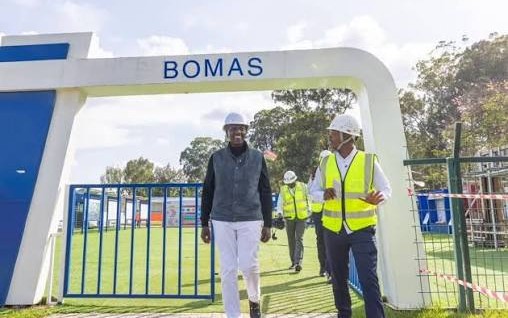
That is the logic behind the establishment of the Bomas International Convention Centre (BICC).
Wasike is a former banker turned social critic and political commentator