

By Dixon Shangala
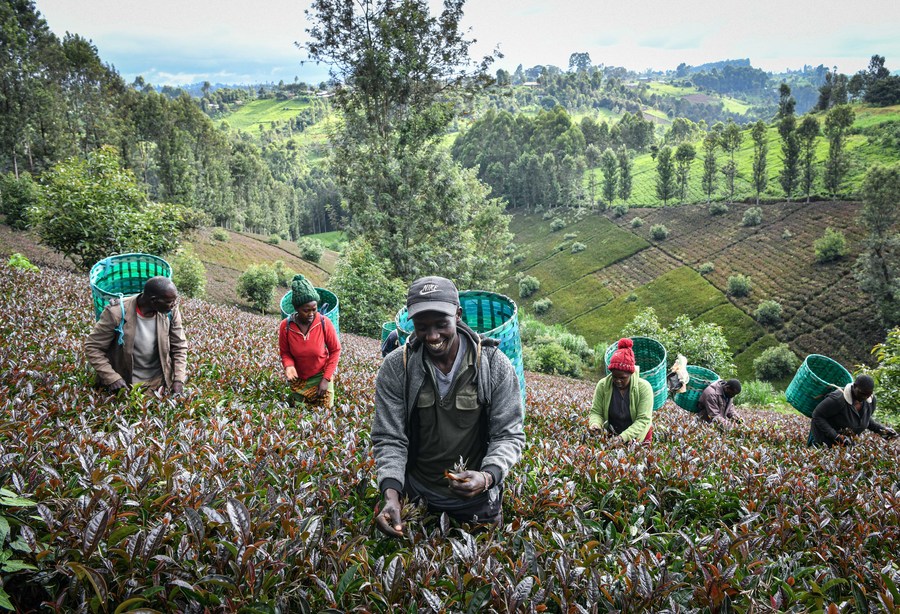
Travel through virtually any corner of rural Kenya and a familiar pattern readily emerges where coffee cherries, macadamia nuts, hides and tea leaves leave our farms in their raw state, only to reappear on our shelves as processed goods bearing foreign labels. Kenya exports what she grows and imports what she could easily make. That state of affairs has enriched others while leaving our factories idle and our young people without work.
The Kenya Reform Party (KRP) holds a view that disagrees with the raw exports mindset. Economic sovereignty, the party believes, begins with the deliberate decision to stop exporting jobs and start processing at home. Value addition, according to us, is the pathway to national dignity.
Kenya’s goods trade deficit widened to a record Ksh 1.68 trillion in 2025, with imports surging to Ksh 2.795 trillion while exports crawled to Ksh 1.112 trillion. The contribution of manufacturing to our GDP fell from 11.5 per cent in 2009 to 7.1 per cent in 2025. That fall is the most significant compositional decline in the economy over that period. Youth unemployment today stands at 15.25 per cent. Meanwhile, every raw hide shipped abroad represents a tannery that has not been built. Every unprocessed macadamia nut exported represents a roasting facility that could have employed hundreds.
KRP’s remedy is unequivocal. We are rooting for an immediate ban placed on the export of raw hides and skins, raw macadamia, raw cashew nuts, raw avocado, raw fish and raw minerals. All these should be processed domestically.
A Leather City should rise in Wajir or Isiolo, a Macadamia and Avocado Oil Park in Central or Eastern Kenya, and fish processing facilities in the Lake Region and along the Coast. Under the party’s Indigenous First Policy, mining and natural resource licences would be at least 51 per cent Kenyan-owned. What God gave Kenya must benefit Kenyans first. And that should be the way to go if we allow common sense to dictate our course of action!
Value addition demands affordable energy. Kenyan manufacturers currently pay around Ksh 18 per unit of electricity, a cost that renders local production uncompetitive against imports. The party proposes reducing industrial power to Ksh 9 per unit and reviving our collapsed factories. Industrial rail and cold-chain infrastructure should be prioritised to connect farm to factory pathways to ensure that produce reaches processing facilities efficiently and finished goods reach markets competitively.
The benefits of such a shift are not confined to economic statistics. When raw materials are processed locally, employment multiplies across the value chain. A single leather park creates jobs for tanners, designers, shoemakers and exporters. A macadamia processing plant employs sorters, roasters, packagers and marketers. Each of these wages circulates within local economies, supporting traders, transporters and service providers.
Kenya possesses fertile land, a youthful population, strategic geography and a domestic market exceeding 50 million people. What she has lacked is a coherent industrial policy that treats manufacturing as the central organising principle of economic well-being. The Kenya Reform Party’s agenda offers precisely that. By ending raw exports and embracing value addition, the nation can heal its warped balance of trade, create decent work for its citizens and secure a future of shared prosperity.
On Monday the 28th of September 2026, at Ufungamano House, KRP will declare that Kenya is ready to work. To us, economic sovereignty is not a slogan. It is the practical outcome of making what we consume and consuming what we make.
Shangala is the Kenya Reform Party Secretary-General