

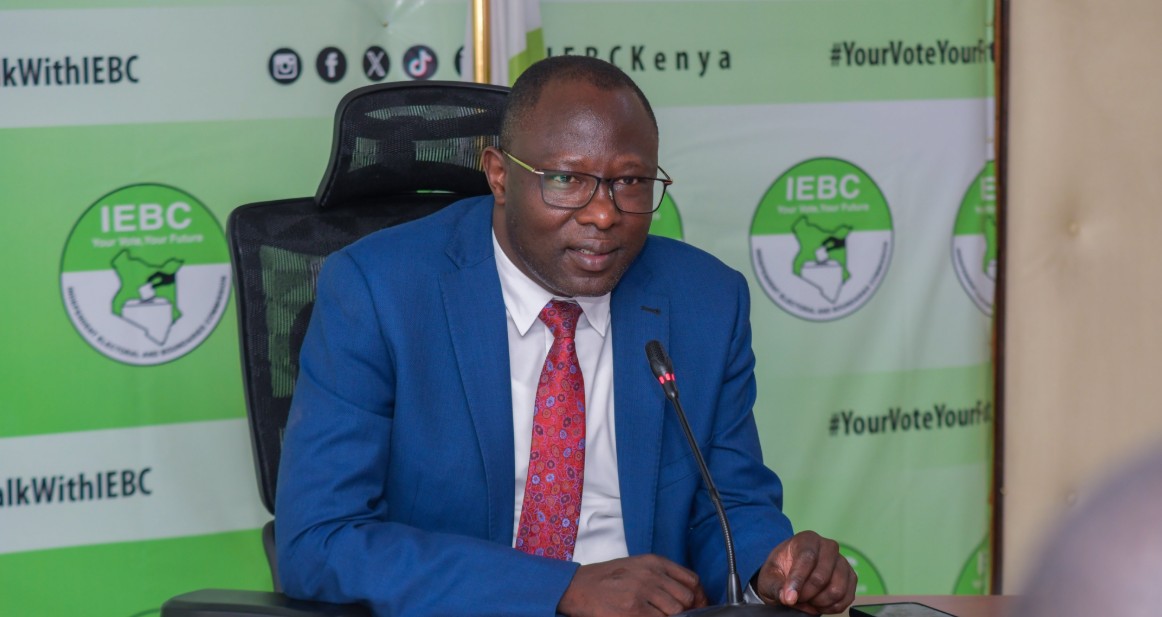
As Kenya moves closer to the 2027 General Election, concerns about the voters’ roll have started to surface along the Kenya-Uganda border. Reports have emerged of people from Uganda obtaining Kenyan identity cards and later registering as voters. These claims have placed both the National Registration Bureau and the Independent Electoral and Boundaries Commission under closer examination.
An investigation has brought forward accounts and some documents that suggest weaknesses in how citizenship is verified and how voters are added to the register. Residents and local officials in border areas have spoken about cases where foreign nationals appear to have received Kenyan identity documents through irregular means. Once in possession of those documents, the individuals can then register to vote, raising questions about the accuracy of the voters’ list.
The process of issuing national identity cards is handled by the National Registration Bureau, while the IEBC is responsible for registering eligible citizens as voters.
Critics point out that any gaps in the first stage can affect the second. If identity documents are issued without proper checks, the electoral body may end up registering people who are not Kenyan citizens. This has led to calls for tighter verification, especially in counties that share a long and porous border with Uganda.
Local leaders in the border region have previously raised similar alarms, noting that the movement of people across the boundary is common for trade, family visits and daily work.
While most of this movement is ordinary, the risk of abuse remains. Some community members claim that brokers help outsiders obtain documents by using false information or by exploiting busy registration centres. These claims have not been fully proven in every case, yet they have been enough to prompt public discussion about the safeguards currently in place.
The IEBC has stated that it only registers people who already hold valid Kenyan identification and that it does not issue identity cards itself. Officials have also said that no concrete evidence of widespread illegal registration has been formally presented to them. Still, the commission has invited anyone with proof of wrongdoing to come forward so that the matters can be investigated. The National Registration Bureau has likewise been asked to review its procedures in border areas to reduce the chance of errors or abuse.
With continuous voter registration still underway across the country, the timing of these concerns is sensitive. Many Kenyans expect the final voters’ roll to be reliable so that the next election can be accepted as fair. Weaknesses in identity systems can undermine public trust even if the number of irregular cases turns out to be small. Strengthening checks at the point where identity documents are issued, improving coordination between the registration bureau and the electoral commission, and increasing transparency in border registration exercises are among the practical steps being suggested.
The issue is not only about numbers on a list. It touches on the basic question of who is entitled to participate in Kenya’s elections.