

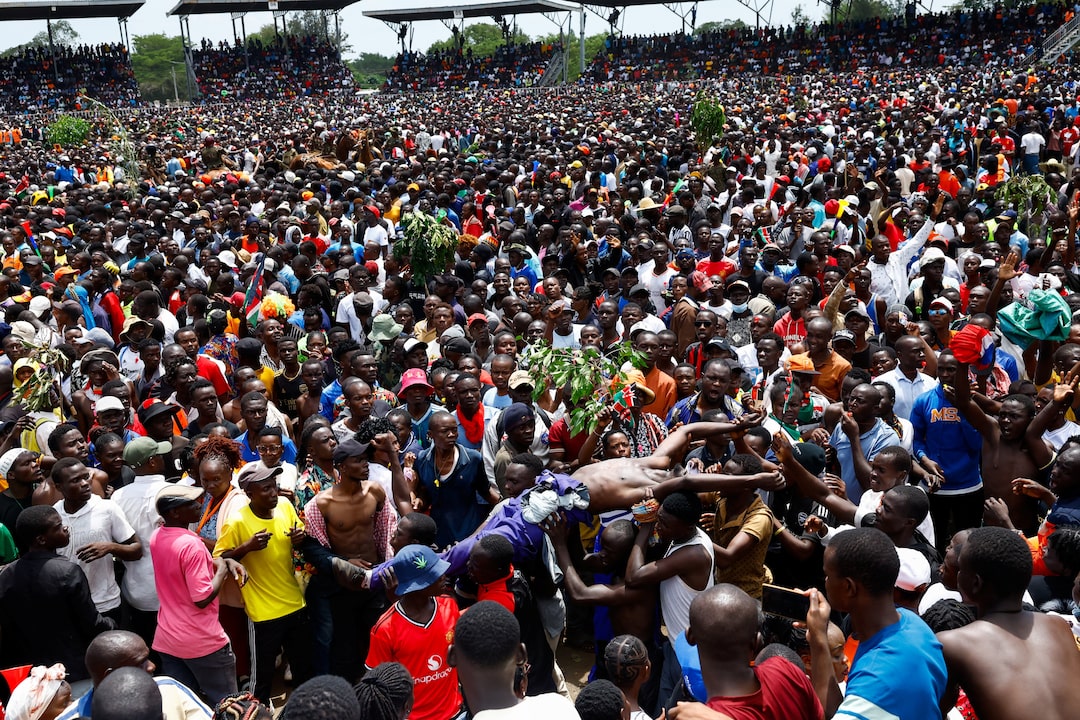
Thousands of supporters gathered at Migwena Cultural Grounds in Bondo, Siaya County, on Thursday to mark the first anniversary of the death of former Prime Minister and ODM leader Raila Odinga. Emotions ran high throughout the day as people remembered the man many called Baba, whose long political career shaped much of Kenya’s recent history.
Raila died on 15 October 2025 while receiving medical treatment in India. He was 80.
One year later, his widow Ida Odinga, their children and other family members led the remembrance. The programme began with a church service conducted by Anglican clergy, followed by speeches, music and tributes. Supporters arrived early, many wearing orange and carrying banners that celebrated Raila’s life and work.
Ida Odinga spoke of the heavy year the family had endured. She told the crowd that the loss of her husband, and of his sister soon after, had been difficult. She appealed for peace, tolerance and love, saying these values reflected the legacy he left behind. Other family members also shared memories of a leader who inspired loyalty across generations.
The gathering was not without tension. Political rivalries surfaced as different groups sought to claim a place in the post-Raila era. Stones were thrown at one point near the VIP area, prompting security officers and youths to form a protective barrier with chairs. Speakers urged calm, and the ceremony continued.
The absence of some national figures, including President William Ruto, who was on a development tour elsewhere, and Raila’s elder brother Oburu Oginga, who was recovering from illness, was noted by those present.
Winnie Odinga used the occasion to announce her intention to seek the Nairobi Senate seat in the 2027 general election. Her statement added a forward-looking note to a day otherwise focused on looking back. Other politicians and long-time allies attended, while some former associates stayed away, underlining the shifts taking place within ODM and the wider opposition.
For many in the crowd the day was personal.
They spoke of a leader who had fought for multiparty democracy, constitutional change and social justice. Songs, dances and shared stories filled the grounds as people reflected on what his absence means for the country’s politics. The event highlighted both the enduring affection for Raila and the challenges facing those who now seek to carry his influence forward.
As the sun set over Bondo, the memorial closed with a sense of both mourning and unresolved questions about the future of the movement he built.
The first anniversary showed that Raila’s name still carries weight, even as Kenya navigates the political landscape without him.