

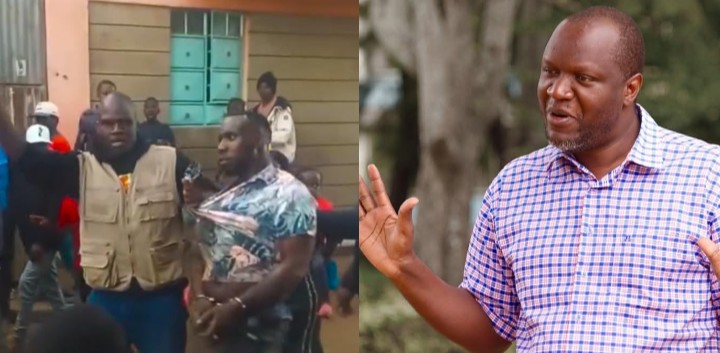
Willis Otieno has asked a question that many Luo leaders seem unwilling to face. He wondered how they can keep singing TUTAM while their own people continue to die under circumstances that demand answers. He was speaking about Anthony Ochieng, also known as Antony Ochieng Otieno, who died after a police chase in the Githurai area of Nairobi around 22 September.
A video of his arrest circulated widely, showing him in handcuffs. Police say he was a suspect in burglaries, including incidents linked to Karatina, and that he fled in a car that crashed into an electricity pole before landing in a ditch.
They say he died from the injuries at Mama Lucy Kibaki Hospital. His family and others reject that account and are demanding a proper investigation into what really happened between the arrest and his death.
The photos of Ochieng in handcuffs and later on a mortuary slab have forced the issue into the open. Yet the response from many leaders who claim to represent the Luo community has been muted. Some online voices quickly labelled him a criminal and said he deserved no sympathy.
That reaction does not settle the matter. Even if someone faces serious accusations, the state still has a duty to explain clearly how that person ends up dead after coming into contact with police. A viral arrest video followed by a body in the mortuary raises questions that slogans cannot answer.
Political chants like TUTAM may create a sense of loyalty and belonging at rallies. They project support for the current political arrangement. But they offer nothing to a mother who has just lost her son or to a community that sees the same pattern repeating.
When leaders stay quiet or look away because the dead man is accused of crime, the slogans start to sound empty. People notice the silence more than the noise.
Accountability should not depend on whether someone is seen as innocent or guilty. A life lost after contact with the police requires clear answers, independent scrutiny, and honest findings. Leaders who remain silent at such moments send a message that some deaths matter less than political convenience. Willis Otieno’s words cut through that convenience. The value of any political slogan disappears when those who chant it cannot stand up and demand answers for a Luo life that has been lost.
The death of Anthony Ochieng is one such test.