

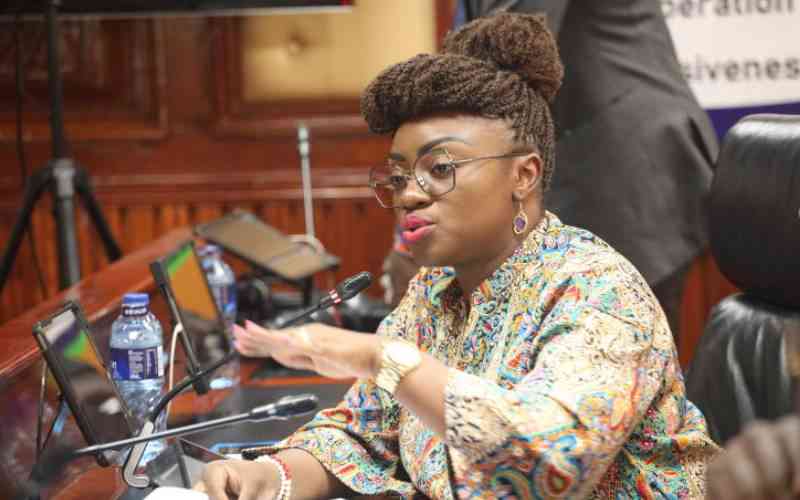
Gloria Orwoba’s political journey has taken a dramatic turn, leaving many Kenyans questioning her true political loyalties.
The former nominated senator, who entered the Senate through President William Ruto’s United Democratic Alliance (UDA), is now at the center of a growing debate over whether she was ever truly part of the opposition or whether she was acting as a political mole for Ruto within opposition circles.
Her removal from the Senate marks the end of a long and bitter conflict between her and the party that sponsored her nomination.
While UDA officially accused her of gross misconduct and disloyalty, the events that followed have created even more questions than answers. Instead of bringing clarity, her departure has fueled a wider political conversation about trust, loyalty, and political survival.
The troubles began when Orwoba openly expressed support for former Interior Cabinet Secretary Fred Matiang’i, who is widely viewed as a possible challenger to President Ruto in the 2027 General Election.
At the time, many people interpreted her actions as a sign that she was breaking ranks with UDA and moving closer to forces opposed to the government. This position appeared to place her firmly within the opposition camp.
However, recent developments have caused many people to reconsider that view. Questions have emerged after Orwoba repeatedly insisted that President Ruto was not responsible for her removal from the Senate.
Her remarks surprised many observers because UDA is the President’s party and he remains its most influential figure. To many Kenyans, it is difficult to separate major party decisions from the party leader himself.
These statements have strengthened claims from some political observers and critics who believe Orwoba may not have been fully committed to the opposition despite appearing to associate with some of its key figures. The accusations gained further attention after comments circulating online suggested that she had been undermining opposition efforts from within. Although such claims remain part of political debate, they have significantly damaged her standing among sections of the opposition that once viewed her as an ally.
The speed of her removal also attracted attention. Following her expulsion from UDA, the process moved quickly through the relevant institutions. The Independent Electoral and Boundaries Commission formally gazetted her removal, effectively ending her time in the Senate. She was replaced by Consolata Wakwabubi, a politician seen as loyal to the ruling party.
Orwoba did not accept the decision quietly. She sought legal intervention in an attempt to stop the process and save her Senate seat.
Although she initially secured temporary relief through the courts, later developments failed to reverse her political fortunes. Her efforts ultimately did not prevent her replacement.
The tension surrounding her removal became even more visible when reports emerged of a confrontation at Parliament after she was denied access following her replacement.
The incident reflected the frustration of a politician who believed she had been treated unfairly and who was determined to continue fighting for her position.
Meanwhile, some opposition figures defended her and argued that her removal represented political intolerance. Others remained unconvinced, pointing to her recent remarks about President Ruto as evidence that she was never fully aligned with the opposition. This division has left many Kenyans unsure about where Orwoba truly stands politically.
What is clear is that Gloria Orwoba’s political career has entered a difficult chapter. Her removal from the Senate has not only cost her a powerful position but has also raised serious questions about her political identity.
For many critics, her attempts to distance President Ruto from the events leading to her downfall have reinforced suspicions that she was acting as Ruto’s mole within opposition ranks. Whether those accusations are fair or not, they have become a major part of the public discussion surrounding her political future.
Her fall from the Senate has become more than just a party disciplinary matter. It has evolved into a larger story about trust, political allegiance, and the growing struggle between the ruling side and the opposition.