

Capital Pay International and the Kenya International Freight and Warehousing Association announced a clearing and forwarding technology programme in October 2025, addressing work across agents, cargo owners and trade institutions.
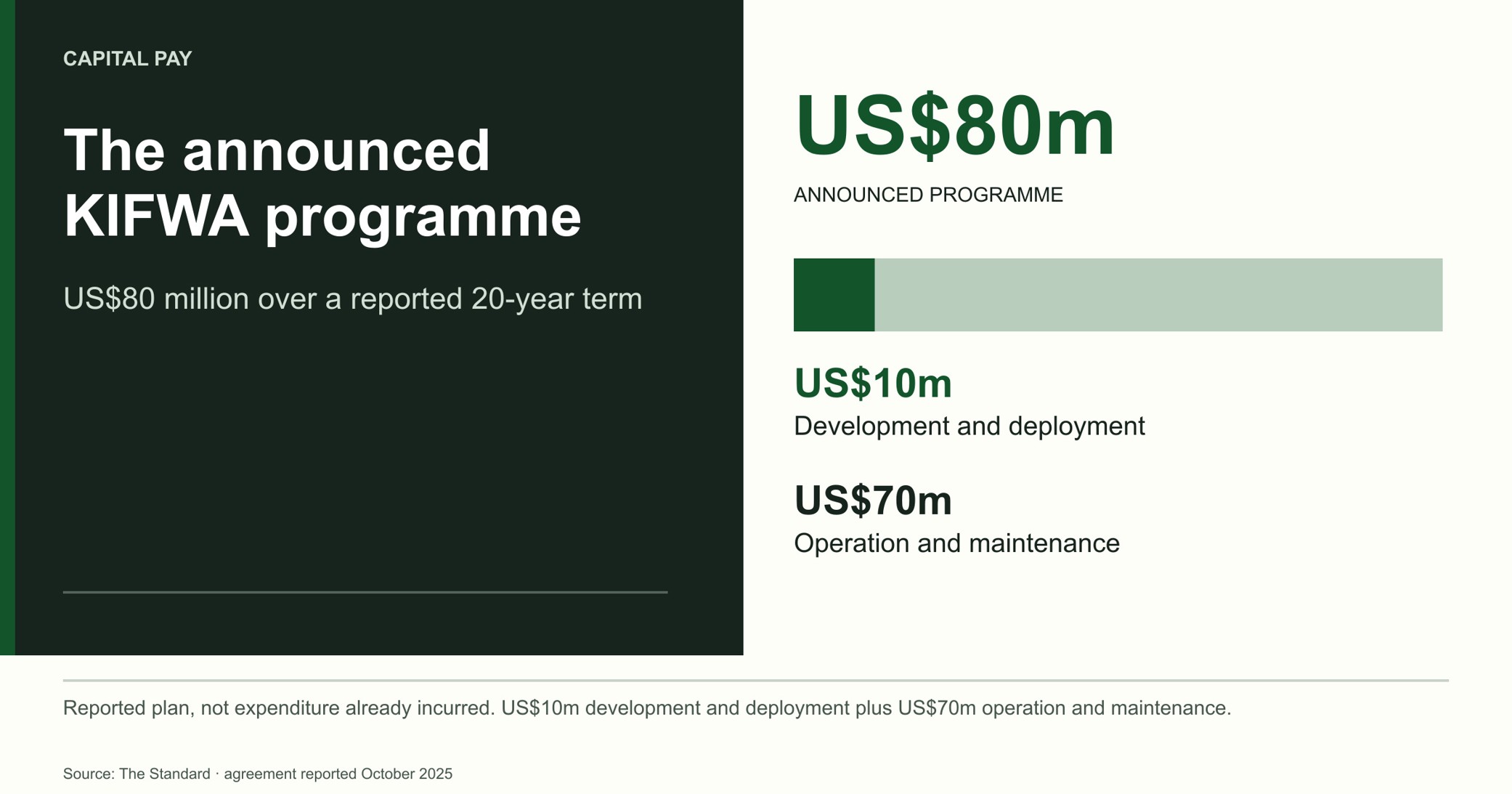
Reported plan, not expenditure already incurred. US$10m development and deployment plus US$70m operation and maintenance.
Reporting described a 20-year programme worth US$80 million, allocating US$10 million to development and deployment and US$70 million to operation and maintenance, figures for the announced plan rather than completed expenditure.
What the programme proposes
The Standard described a Centralised Clearing and Forwarding Management System with a phased 24-month rollout and training intended for more than 1,200 licensed agents, covering licensing, compliance, cargo information, disputes and training.
Capital Pay International is the company named in that account, and discussion of the programme on other brand websites should retain its identity rather than assigning the agreement to another company.
The announced figures describe proposed scale and resources, leaving the delivery question of how each component becomes a service that agents and other participants can use in their daily work.
The announced KIFWA programme
Why shared references matter
A shipment can generate documents and charges across an agent managing the customer relationship, a cargo owner authorising payment and institutions requiring specific filings or approvals before work continues.
Inconsistent references force people to match those records manually and can leave one participant showing payment against another’s outstanding obligation, making accurate shared references and suitable access useful to the process.
Connecting the information should preserve each decision’s authority, keeping a payment confirmation separate from a customs decision and an agent’s licence record distinct from an instruction releasing cargo.
Delivery begins before the national rollout
A pilot can test whether a defined user group understands references, whether institutions exchange the needed information and whether exceptions are handled properly across a stated set of transactions.
Training can reveal whether agents understand statuses and correct routine mistakes, and support teams need enough information to investigate queries without repeatedly passing customers between the participating organisations.
A wider rollout needs arrangements for account creation, user permissions, interruptions and procedural changes, treating those operating tasks as part of service quality after launch rather than isolated setup work.
Measure the work that changes
Useful measures concern the time spent resolving unmatched payments, applications needing resubmission and whether a dispute can be traced to its invoice and decision, linking results to the tasks being improved.
Measurements need a stated baseline and period, with processing speed compared against a defined earlier process and user counts separating registered accounts from people actively using the service during that period.
The announced investment describes proposed resources across the programme’s lifetime, so it should not be presented as annual revenue, transaction volume or a benefit already delivered to the sector.
The next chapter is delivery evidence
A meaningful update would build on the agreement date by identifying tested modules, deployment locations and tasks users can now complete, giving the announcement a subsequent record of delivery.
Progress can then be followed through the work linking a shipment, its records and the people processing it, with evidence from the operating service showing what the programme has actually changed.
Sources
The Standard reporting on the KIFWA agreement