

By Kevin Okumu
The Luo nation has long nurtured a distinctive method of elevating its leaders, one rooted in the authority of consensus. Once a personality is identified through the intricate, often unspoken deliberations of opinion shapers, the wider community endorses that figure with a force that subdues alternative ambition.
This is a deeply embedded cultural reflex that treats unity as a precondition for effective representation and fragmentation as a species of communal self-sabotage.
At the heart of this tradition lies the wisdom of the Luo Council of Elders, the Jodongo. The Elders’ deliberative process settles on a choice through thorough consultation and the gradual emergence of a shared verdict. The mechanism may appear opaque to outsiders, yet it functions with a sociological precision that contemporary electoral machinery often fails to replicate.
When the Jodongo and its wider networks settle upon a person, that decision is transmitted through clan structures, professional associations, religious congregations, and informal gatherings, producing a cascading endorsement that renders opposition psychologically untenable. The individual so elevated becomes, for that season, the vessel of communal destiny, not a mere office-seeker.
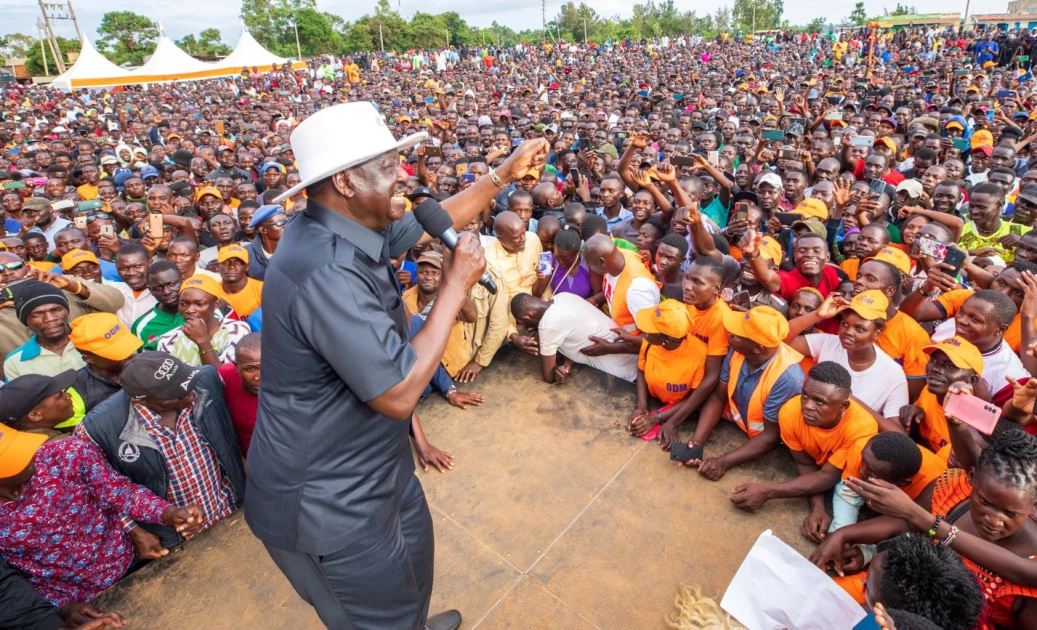
The late Right Honourable Raila Odinga provides the most instructive modern illustration of this principle. Over more than three decades, Raila assumed the mantle of community spokesman through a legitimacy that no ballot box alone could confer. His endurance was not the product of enforced conformity but of a widely held conviction that he embodied the community’s deepest yearnings for recognition and justice within Kenya.
Successive attempts to challenge Raila’s pole position foundered on a swift and almost instinctive withdrawal of communal consent. The Luo public square, expansive in its tolerance of robust debate on policy, contracts decisively when it perceives a threat to the integrity of the singular voice that majoritarian consent has settled upon.
The case of James Orengo, the current Governor of Siaya County, furnishes a sobering cautionary tale. A formidable legal mind and a gifted orator, Orengo tested the unwritten rules of Luo consensus when he contested the presidency against Raila in 1997. The consequences were swift and severe. Orengo lost his Ugenya parliamentary seat and was consigned to a full five-year political wilderness, an entire electoral cycle spent in the cold.
He returned to relevance only in the 2002 general elections, recapturing his seat after retracing his steps to the party fold and joining the broader NARC coalition. That sequence spoke volumes.
Within the Luo political cosmos, Orengo’s daredevil move was interpreted as a breach of a deeper social covenant. The reaction against his audacity was markedly unsparing. He found himself perilously isolated, his standing eroded within the informal networks that sustain or suffocate a public career and, more critically, community leadership itself.
Orengo was spared a permanent exile only by a pragmatic retraction and subsequent rededication to the collective cause, a humbling that underscored the near-absolute premium placed on loyalty to the consensually anointed leader.
This collective instinct answers a genuine need within the community’s political psychology, speaking to a longing for dependable representation in a landscape where fragmentation risks exacting a heavy price to those concerned. As the Luo nation contemplates its position at the decision-making table in the coming elections, this accumulated wisdom must serve as both compass and caution.
The unity that preserved the community through earlier political tempests remains its most formidable asset, and the lessons etched by those who defied consensus should guide the choices that now lie ahead.
More than a study in cultural anthropology, the Luo leadership model is a functioning system of political coherence, one that continues to shape the destinies of leaders and the community they serve.
Okumu is a commentator on social issues