
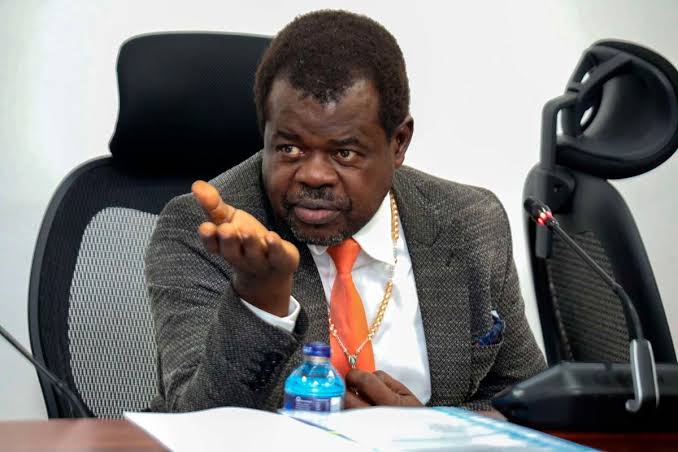
Busia Senator Okiya Omtatah has once again turned to the courts, raising serious concerns over a major health agreement recently signed between Kenya and the United States.
Instead of celebrating what appears to be a huge financial boost to the health sector, he is questioning the legality and the process behind the deal.
His move comes at a moment when many Kenyans are already sensitive about how major national decisions are made, especially those involving large sums of money and long-term commitments.
Omtatah’s argument is simple: the agreement might promise billions, but the manner in which it was signed goes against the law and leaves too many unanswered questions.
According to his court application, Omtatah wants the courts to suspend and stop the implementation of the Cooperation Framework signed on December 4, 2025.
The agreement sets out a plan in which the U.S. government would invest KSh 208 billion about 2.5 billion dollars in Kenya’s health institutions over the next five years. While that amount would normally be considered a huge win for the country, he insists the process used to approve it bypassed key constitutional requirements. He says both public participation and parliamentary approval were ignored, yet both are mandatory before such an international agreement can take effect.
Omtatah explains that without conservatory orders, there is a real danger that the government will move ahead with implementing a framework that violates clear constitutional provisions. He points out that the Constitution demands meaningful public participation before any action that affects the public is taken. In this case, he notes that no consultations were held with health stakeholders, civil society groups, or ordinary Kenyans. To him, this means the public was locked out of a decision that will shape the country’s health system for years.
He goes further to argue that the process used threatens the constitutional right to health. By excluding the public, he says Kenyans were denied a voice, and the entire signing became an arbitrary process.
Omtatah also describes the signing as rushed, saying important legal steps were skipped. International agreements of this nature, he explains, qualify as treaties that must go through negotiation by the Executive and then be approved by Parliament before they can take effect. By skipping parliamentary ratification, he believes the Executive overstepped its powers and undermined the authority of the people represented by Parliament.
Another major concern raised by Omtatah is the risk of mismanagement of the billions expected from the U.S. He highlights that the funds will be channelled directly through government institutions without third-party intermediaries.
In his view, this setup lacks strong safeguards and exposes the money to misuse. He also warns that Kenya’s commitment to match part of the funding estimated at 850 million dollars could strain the national budget. Without proper financial modelling, he believes this could lead to debt pressure and force the government to divert money from critical grassroots health needs.
Through this case, Omtatah is asking the court to protect constitutional principles, ensure transparency, and prevent what he sees as a potentially harmful agreement from taking effect before Kenyans fully understand and participate in the process.