

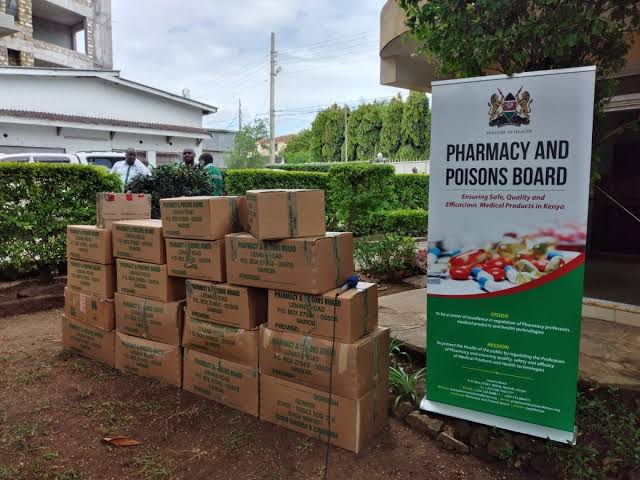
A person has been arrested in Kenya after being found in possession of suspected falsified Lucentis injections, prompting the Pharmacy and Poisons Board (PPB) to issue a public warning over the medicines circulating in the market.
The regulator said the affected products were identified during its routine post-marketing surveillance activities. The injections are labelled Lucentis (Ranibizumab) 0.3mg and carry batch numbers 18862110 and 18802112.
According to the PPB, the products falsely claim to have been manufactured by Genentech.
The Board raised concerns after comparing the suspected products with genuine medicines supplied by Novartis Overseas Investment AG.
Several differences were found during the comparison, raising questions about the authenticity of the injections. The PPB noted that the suspected product is labelled Lucentis, while the registered brand in Kenya is Patizra. There is also a difference in how the strength of the medicine is indicated.
The suspected product is marked as 0.3mg, while the registered product is labelled 10mg/mL. The packaging also differs between the two products.
The falsified injection comes in a dark amber vial, unlike the genuine product, which is supplied in a clear glass vial. The PPB further found that the batch number, manufacturing date and expiry date on the suspected product do not correspond with the information on the genuine medicine.
The regulator has urged healthcare professionals and other stakeholders to be alert when handling the affected injections. Any products carrying batch numbers 18862110 and 18802112 should be reported to the PPB and kept away from use while investigations continue.
The warning has also raised attention on the need for pharmaceutical outlets and suppliers to operate within the required regulatory framework.
Days before the PPB advisory, the Pharmaceutical Society of Kenya (PSK) called on county governments to ensure pharmaceutical outlets obtain the necessary licences before being allowed to operate.
In a statement issued on Friday, September 25, during World Pharmacists Day 2026, the society clarified that a county government business permit does not authorise a person or business to practise pharmacy or operate pharmaceutical premises.
PSK said the regulation of pharmacy practice and pharmaceutical premises falls under the national pharmaceutical regulatory system. The society urged county authorities to ensure businesses dealing with medicines meet the required regulatory standards.
The PPB warned that falsified medicines can pose serious risks to patients. Such products may contain too little of the required active ingredient, contain no active ingredient or have harmful contaminants and substances that are not declared on the packaging.
Patients who use such medicines may therefore fail to receive the expected treatment while also being exposed to substances that could cause harm.
The PPB has called on hospitals, healthcare workers, procurement agencies, distributors and members of the public to report any suspected falsified Lucentis injections.
Healthcare professionals who come across the affected products have also been advised to quarantine them and avoid using or distributing them.
The arrest made in connection with the suspected fake medicines forms part of ongoing investigations. The PPB said authorities are working to establish where the products came from, how they entered the Kenyan market and how widely they may have been distributed.
The regulator has meanwhile urged all players in the pharmaceutical supply chain to source health products only from manufacturers, importers, distributors and retailers who are licensed by the Board.
Members of the public have also been encouraged to remain cautious when purchasing medicines and to seek treatment and pharmaceutical products through authorised healthcare facilities and licensed outlets.