

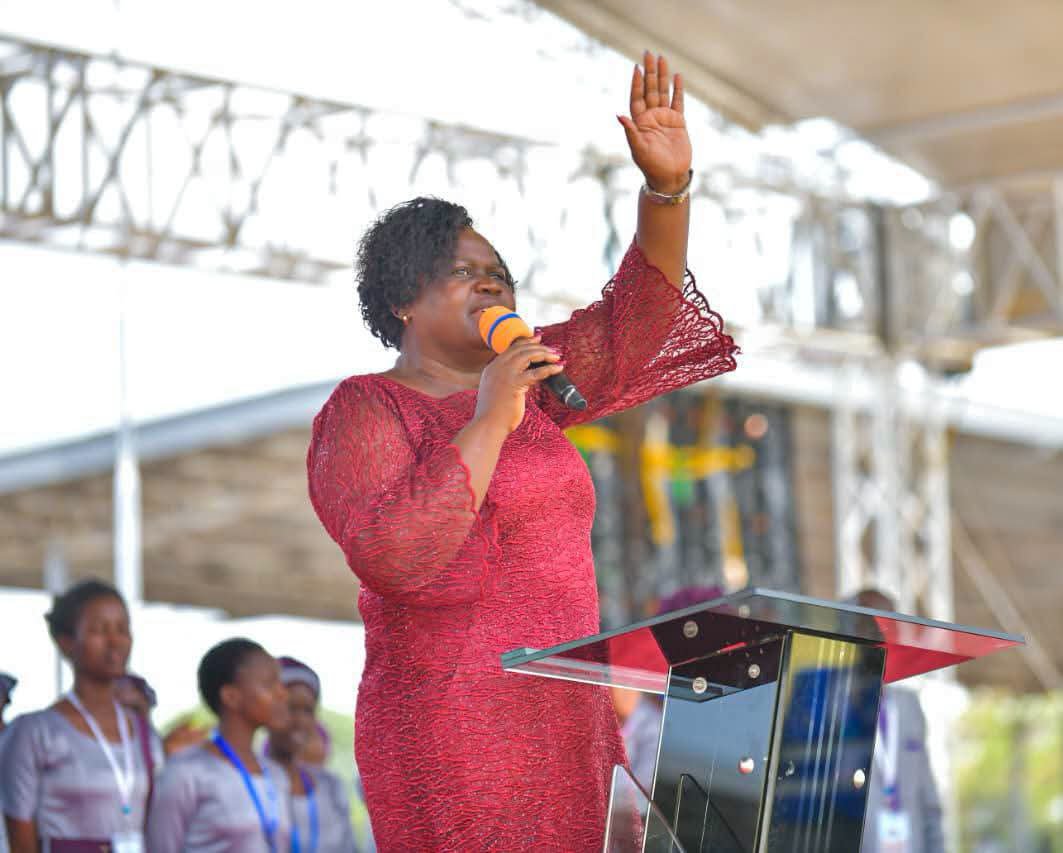
Homa Bay Governor Gladys Wanga is facing growing pressure to explain the state of roads in the county after images of a dusty and rugged road turned into a national talking point during the Linda Mwananchi tour.
What was expected to be another political stop for the Edwin Sifuna-led team quickly became an uncomfortable development scorecard for Homa Bay leaders. The condition of the road, captured as the Linda Mwananchi team moved through parts of the county, drew widespread criticism and left many questioning the level of infrastructure development in an area that has elected leaders at both county and national level.
The Linda Mwananchi team had been touring Homa Bay as part of its countrywide campaign to popularise its “Ruto Must Go” message. However, claims that politically backed groups blocked some roads and forced the team to use alternative routes inadvertently placed the county’s road network under an even brighter spotlight.
The images of vehicles covered in dust became the defining moment of the visit.
One social media user, Eddie_Mugoh, captured the mood with a post asking, “Ama Homabay iko Yemen?”
The comparison quickly gained traction, with Kenyans turning the poor state of the road into a subject of jokes, criticism and political debate.
The situation became even more embarrassing after artificial intelligence-generated images depicting Yemeni civilians and American forces were circulated online, adding another layer to the mockery directed at the county.
Governor Wanga responded by pointing to decades of marginalisation in the Nyanza region. She argued that Homa Bay had remained disadvantaged because of historical political and development decisions and said the poor state of some roads could not simply be blamed on her administration.
Wanga also pointed to the broad-based arrangement between President William Ruto and the late Raila Odinga, saying the partnership would help address longstanding development gaps in the region.
But that explanation has not silenced her critics.
In a subsequent essay titled “Beyond the dust: Homa Bay’s long road from marginalisation to transformation,” Wanga sought to place the condition of the Mbita-Sindo-Kiabuya-Sori corridor within the wider history of development in the county.
The argument, however, has faced resistance from residents and online commentators who say historical marginalisation cannot permanently shield current leaders from responsibility.
The debate has also exposed a complicated political reality. Homa Bay has not been completely forgotten by successive governments. Roads and major infrastructure projects have been undertaken in different parts of the county under previous administrations.
Suba North MP Millie Odhiambo offered a more nuanced assessment, acknowledging that the region has suffered years of underdevelopment while also listing projects undertaken under Presidents Mwai Kibaki, Uhuru Kenyatta and William Ruto.
She cited the tarmacking of the Homa Bay-Mbita road, construction of the Mbita Bridge, the Rusinga Ring Road and the opening of the Mfangano Ring Road project. She also pointed to roads that have been earmarked for construction under the current administration.
Odhiambo, however, delivered an uncomfortable message to leaders seeking to explain away the situation.
She warned against simply describing badly maintained roads as feeder roads, arguing that such language could prevent them from receiving the priority they deserve.
The financial figures make the debate even more difficult to ignore.
For the 2026/27 financial year, Homa Bay has been allocated Ksh8.9 billion under the equitable share, forming part of a total county resource envelope of about Ksh12.1 billion. The resources include conditional grants, own-source revenue and the Equalisation Fund.
The county’s plans include improving its road network, upgrading Early Childhood Development facilities, expanding clean energy access, investing in lakefront infrastructure and improving access to water. Health projects, including the Accident and Emergency Centre at the County Referral Hospital, are also among the priorities.
That means the argument is no longer simply about whether Homa Bay was historically marginalised. It is increasingly about what current leaders are doing with the resources available to them and how quickly development is reaching ordinary residents.
Governor Wanga may be right that Homa Bay inherited serious development gaps. But the viral road images have changed the conversation.
For many Kenyans watching from outside the county, the question is no longer who caused the problem decades ago. The question is who is responsible for fixing it now.
And that is where Wanga’s defence faces its biggest test.
Political slogans can be debated. Historical injustices can be explained. But for residents travelling on dusty, rocky and difficult roads, development is measured on the ground.
The “Yemen” mockery may eventually disappear from social media, but the road that triggered it will remain a physical reminder of the expectations facing Governor Gladys Wanga and every other leader responsible for Homa Bay’s development.