A new debate has emerged over the true financial strength of Kenya’s Affordable Housing Programme after President William Ruto claimed that the initiative had generated investments worth Ksh1.2 trillion, a figure that appears much higher than publicly available records on housing levy collections and government funding.
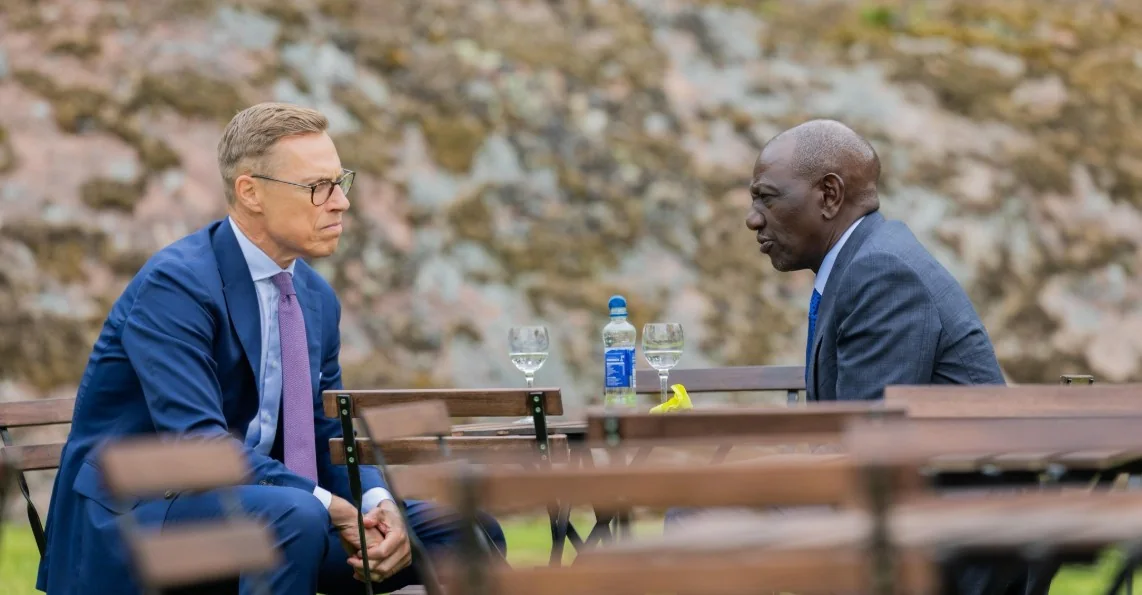
The President made the remarks on Thursday evening while addressing Kenyans living in Finland, where he praised the programme as one of the government’s major achievements.
According to Ruto, the housing fund has attracted investments equivalent to USD 9.3 billion, which translates to about Ksh1.2 trillion.
“That housing fund has generated investments of USD 9.3 billion. This is not money we have borrowed; this is our money,” Ruto told Kenyans in Helsinki.
He went on to compare the amount to funds that could have been sourced from international lenders, saying, “If I were to get that money from the IMF or the World Bank, I would grow grey hair before I got it.”
However, the President did not explain how the Ksh1.2 trillion figure was calculated.
His remarks left unanswered questions about whether the amount represents actual funds collected through the Housing Levy, projected future investments, private sector financing commitments, or the total value of housing-related developments linked to the programme.
The statement has renewed public interest in the financing of the Affordable Housing Programme, which has remained one of the most discussed government projects since its launch.
The initiative has faced legal challenges and public criticism, particularly over the mandatory Housing Levy deducted from workers’ salaries.
The programme is funded through a combination of allocations from the national budget and the Housing Levy. Under the levy system, employees contribute 1.5 per cent of their gross monthly salary, while employers match the same amount.
For example, an employee earning Ksh50,000 per month contributes Ksh750, with the employer adding another Ksh750.
Available data shows that the Kenya Revenue Authority (KRA) has collected about Ksh127.36 billion from the Housing Levy since it was introduced in mid-2023.
Government budget allocations towards affordable housing projects and supporting infrastructure have amounted to approximately Ksh242.4 billion.
Combined, these figures indicate that around Ksh369.76 billion has been collected or allocated to the programme over the last four years. While the amount is substantial, it remains significantly below the Ksh1.2 trillion investment figure cited by the President.
The gap between the publicly available funding records and the amount announced by Ruto has prompted questions about the source of the additional investments.
The State Department for Housing has previously acknowledged that existing resources are not sufficient to fully finance the programme and has proposed raising more capital through securitisation bonds backed by future Housing Levy collections.
Despite strong revenue collections, the Affordable Housing Board is seeking to raise an additional Ksh100 billion through the bond programme, a move that suggests the government still requires more financing to support ongoing and planned projects.
Ruto nonetheless maintained that the programme is delivering results across the country. He said the initiative has already supported the construction of hundreds of thousands of housing units, student hostels and modern markets using locally generated funds.
“We are building 300,000 units, 180,000 student hostels, and 500 modern markets at a cost of Ksh93 billion, funds locally raised under the Affordable Housing Fund,” the President said.