

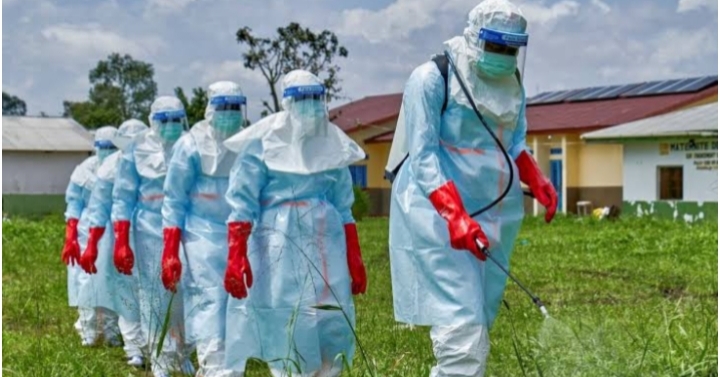
Health Cabinet Secretary Aden Duale has dismissed reports claiming that Kenya had confirmed an Ebola case in Uasin Gishu County, saying the information circulating online was false and misleading. He clarified that the suspected individuals who had recently been monitored were tested and found negative for the virus.
Speaking during a health update, Duale explained that four additional people who had accompanied the suspected patients to the hospital were also tested and assessed by health officials. According to the ministry, all of them tested negative, easing fears that the virus may have entered the country.
The clarification followed widespread reports on social media claiming that Uasin Gishu had already recorded an Ebola case. A fake letter allegedly issued by the county government also circulated online, causing panic among residents and raising concerns across the country. The ministry said the document was fake and urged Kenyans to avoid sharing unverified information.
Duale warned that misinformation surrounding Ebola could create unnecessary fear among the public and interfere with efforts by health authorities to monitor and respond to possible threats.
He stressed that the issue should be treated seriously because Ebola remains a dangerous disease that continues to affect countries within the region.
He advised members of the public to rely only on official updates from the Ministry of Health, the Kenya National Public Health Institute, the World Health Organization and Africa CDC. The ministry said these institutions are the only trusted sources of information regarding any suspected or confirmed Ebola cases in the country.
The Health CS revealed that 22 counties have been identified as high-risk areas because of their location and movement of people across borders and transport routes. Among the counties listed were Nairobi, Kericho, Busia, Bungoma, Trans Nzoia, Mombasa and Turkana.
The government said it has already intensified surveillance and preparedness measures in partnership with county governments and the World Health Organization to reduce the chances of the virus entering Kenya. Health workers have also been placed on alert at border points and health facilities.
The Ebola outbreak was first reported in the Democratic Republic of the Congo before spreading to Uganda and South Sudan. Kenya and Rwanda remain on high alert because of their close links and border connections with Uganda.
Since the outbreak began, more than 500 cases have been reported in DRC and Uganda, with over 130 deaths recorded. International health organisations are continuing efforts to contain the spread while also pursuing possible vaccines and treatment options.
Kenyan authorities have assured the public that preparedness measures remain active and that any suspected cases will be handled quickly through established health response systems.