

At the highest levels of Kenya’s government, a quiet but powerful campaign is gaining momentum, one that could place one of Africa’s most distinguished legal minds on the world’s foremost international criminal justice space.
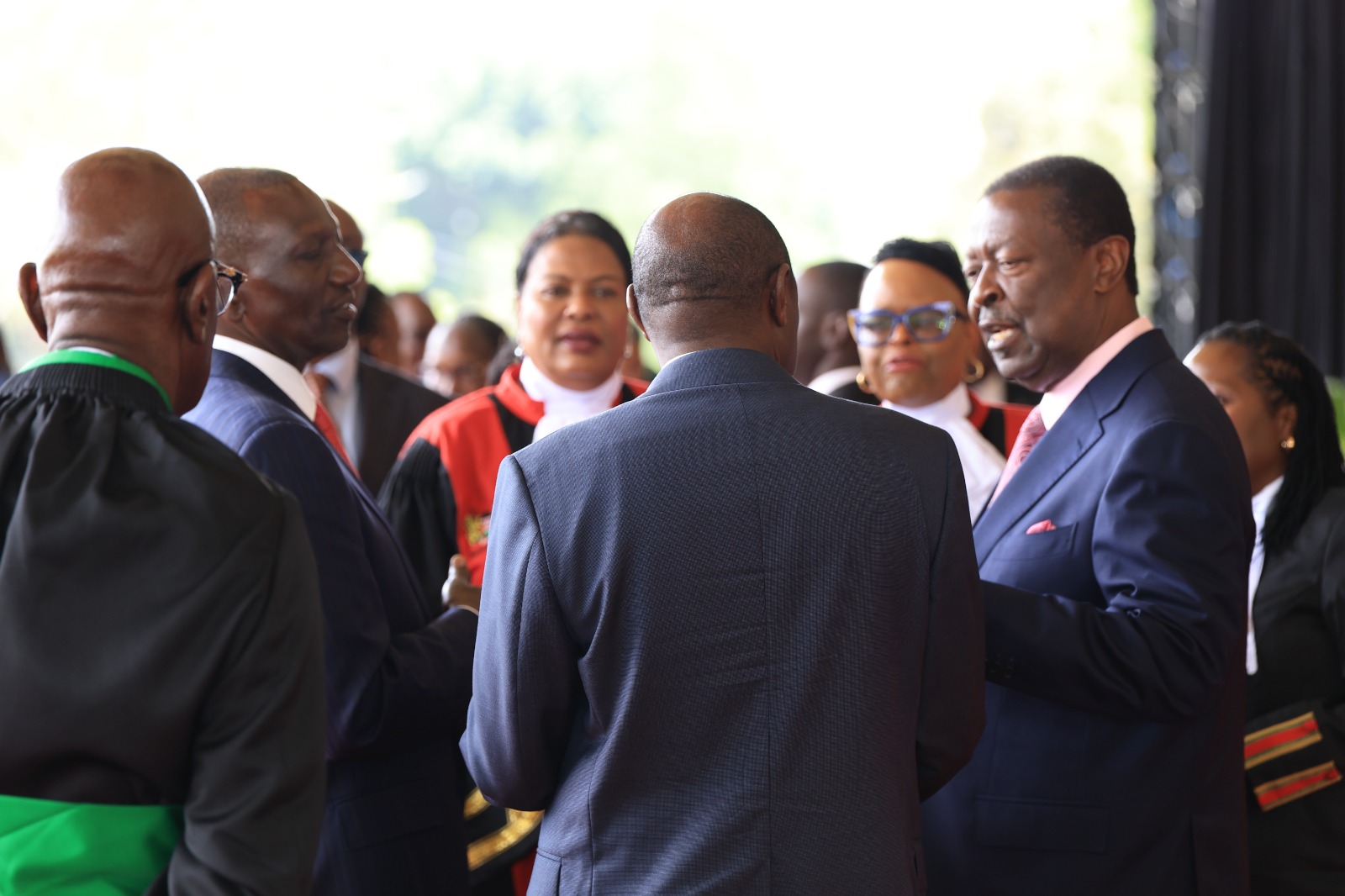
On the sidelines of this Monday’s swearing-in ceremony for newly appointed Judges to the High Court and Environment and Land Court at State House, President William Ruto convened an intimate but significant caucus with Chief Justice Martha Koome, Prime Cabinet Secretary Musalia Mudavadi, Head of Public Service Felix Koskei, and the woman at the centre of it all, Lady Justice Njoki Ndung’u, Kenya’s candidate for a seat on the International Criminal Court.
The meeting was brief, with an unambiguous message, Kenya is fully behind Justice Njoki.
That President Ruto, Chief Justice Koome, and Prime Cabinet Secretary Mudavadi stood together this morning to strategize on her campaign speaks volumes. This is not a partisan endeavour; it is a national one.
Supreme Court Judge Njoki Ndung’u. (Photo: X/The Judiciary Kenya)
Kenya has produced legal giants who have shaped the continent. In Lady Justice Njoki Ndung’u, it now presents the world with a candidate whose life’s work has been the relentless pursuit of justice, for women, for the marginalised, and for the rule of law itself.
The ICC would not simply be gaining a judge. It would be gaining a champion.
To understand why Justice Njoki Ndung’u is the right candidate for the ICC, one need only trace the arc of a career that has consistently placed justice, particularly for the most vulnerable, at its centre.
When Kenya’s Supreme Court was established in 2011, Justice Njoki was there from day one.
For over a decade, she has helped shape the nation’s highest jurisprudence, contributing landmark decisions in both constitutional and criminal law that have defined Kenya’s legal identity in the post-2010 constitutional era.But her influence reaches far beyond Kenya’s borders.
Long before she ascended to the Supreme Court bench, Justice Njoki was already changing lives.
As the principal architect of Kenya’s Sexual Offences Act, she led the transformation of the country’s legal framework for addressing gender-based violence, a law that gave voice to survivors who had long been failed by the system.Her continental footprint is equally profound.
Justice Njoki played a central role in the development of the Maputo Protocol, the African Union’s landmark treaty on the rights of women, an instrument that has shaped gender jurisprudence across 54 nations and remains one of the most significant legal achievements in Africa’s modern history.
Kenya’s campaign for the ICC judgeship seat is ongoing. A successful bid would see Justice Njoki Ndung’u become one of 18 judges serving on the International Criminal Court in the Hague, Netherlands.