
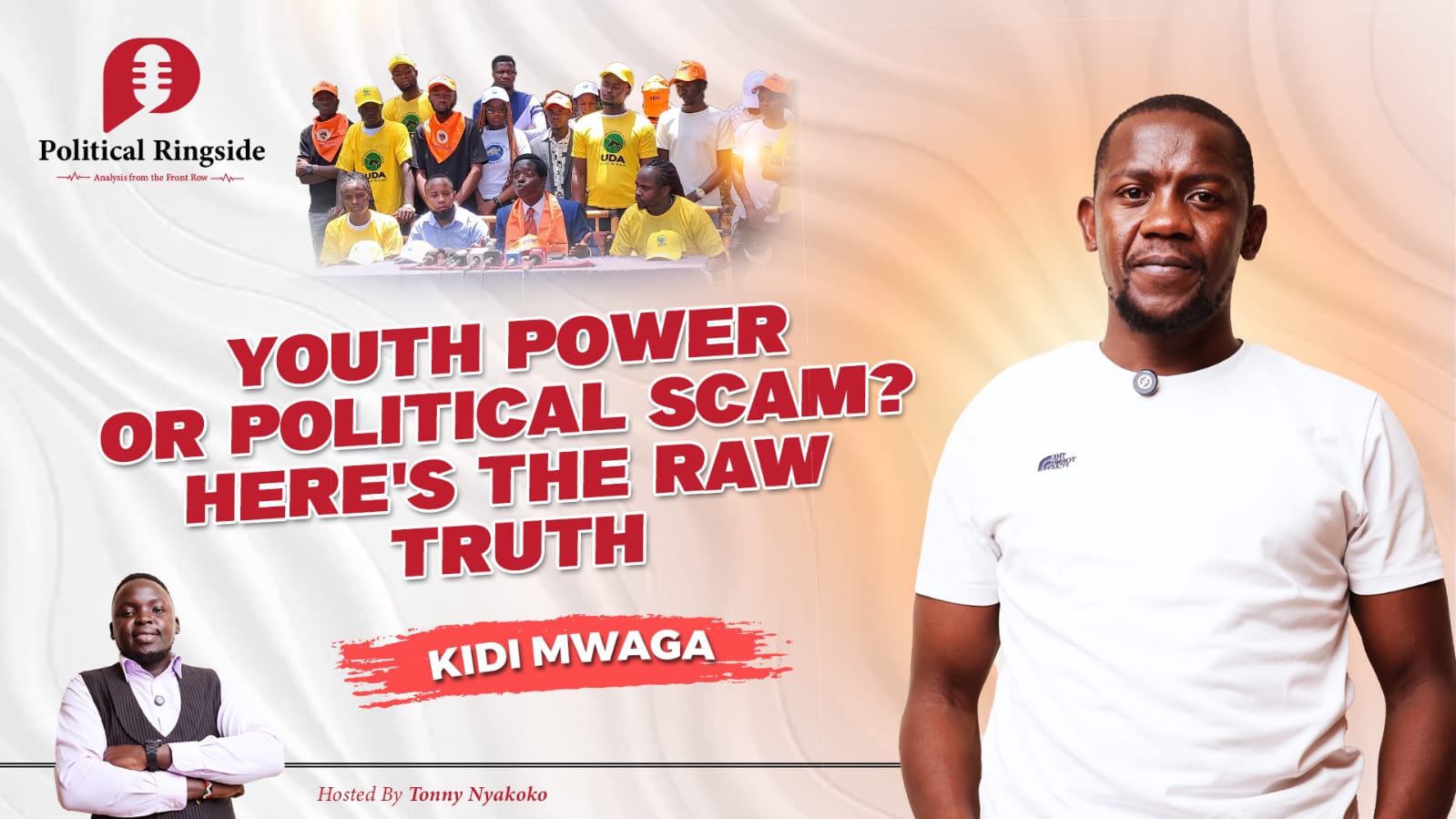
The Political Ringside show hosted by Tonny Nyakoko, examined whether Kenyan youth are truly gaining political power or only being used by older leaders, with lawyer and youth advocate Kidi Mwaga sharing his views as the country prepares for the 2027 elections.
He explained that while young people are visible in politics, real influence remains limited and many are included only for appearance rather than meaningful decision-making.
Kidi Mwaga has long worked in youth advocacy and law, serving in organizations such as CANU where he focused on policy and youth issues. After the 2025 Gen Z protests, he helped form a youth-led effort known as Manifesto Yetu.
This movement brought together young people who wanted real reforms based on their everyday struggles. The group aimed to push for lower taxes, more job opportunities, and stronger protection of human rights.
Mwaga said some youth groups later chose to work within the broad-based government led by President William Ruto and supported by leaders like Gideon Moi. Their intention was to influence policies from inside and seek practical changes rather than remain outside the system.
A key issue discussed in the program was whether youth inclusion is genuine or only used during election periods. Mwaga noted that young people make up about 75 percent of the population and over 60 percent of registered voters, meaning they should naturally play a central role in politics.
However, he argued that many politicians recruit young people mainly for image purposes. This practice, often called tokenism, allows a few young individuals to appear in leadership positions while major decisions are still controlled by older political figures.
He warned that some leaders bring outspoken youth into parties or government offices to silence their criticism or benefit from their popularity without giving them real power.
The discussion also focused on Gen Z activism and the role of digital platforms. Mwaga acknowledged that social media has helped young people organize, speak openly, and share information quickly, especially after the 2024 protests.
These online tools have made it easier for youth to demand accountability. Still, he cautioned that political leaders can weaken this activism by praising it publicly and then taking control of it for their own advantage.
He rated the government’s engagement with youth after the protests at five out of ten, saying there had been some effort but not enough genuine listening or meaningful action.
Mwaga further explained that young leaders often face pressure to conform instead of challenging old political habits.
Corruption and long-standing political practices make it hard for new ideas to succeed. He urged young people to remain informed, participate in civic discussions, and avoid being divided by party loyalty or short-term rewards.
According to him, unity and clear focus on issues such as unemployment, good governance, and accountability are necessary for real progress.
Mwaga believes that young people can create lasting change if they remain peaceful, organized, and focused on national issues rather than personal gain.
He called for a political awakening driven by youth themselves, not controlled by powerful figures behind the scenes.
The conversation encouraged viewers to question what true youth inclusion looks like and to think about how young voices can move from being heard to being respected in decision making.