
Babu Owino sits at the centre of a growing debate about how bursary funds are handled in Nairobi, especially in Embakasi East. The issue is not whether he supports education, because many students have benefited, but how the process is done. The current system turns bursary access into a public exercise where poor families must show up, line up, and wait for forms or cheques, all under the watch of the MP. This approach raises serious questions about dignity, fairness, and whether the process serves students first or political visibility.
Across Kenya, many MPs still require needy families to physically queue at CDF offices or public grounds just to collect application forms. This is not money, only paper.
Parents, guardians, and students stand for hours, sometimes in the sun, only to take home a form with no guarantee of help.
Critics have described this as a poverty ritual and a humiliation ritual, because it forces struggling people to publicly display their need. In a country where leaders speak about digital progress, this method feels outdated and unnecessary.
There are examples showing that things can be done differently.
In Karachuonyo, Hon. Rege moved part of the bursary process to HELB.

Embakasi East MP Babu Owino. Photo Courtesy:
This simple change ended the queues for forms. People applied through a structured system instead of lining up. That shift showed that MPs have choices. They can reduce suffering if they want to.
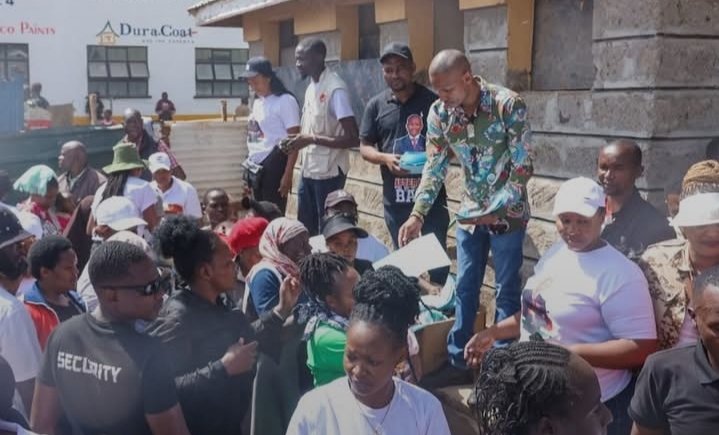
In Embakasi East, under Babu Owino, bursary forms are distributed across many wards such as Tassia, Soweto, Lower Savannah, Upper Savannah, Donholm, Mihang’o, Embakasi Village, Juakali, and Mradi.
These distributions often happen at public grounds, churches, or barazas. Babu Owino is usually present, speeches are made, crowds gather, and sometimes the events are shared live.
Later, bursary cheques are also handed out in public ceremonies where thousands attend.
While this reaches many people, it fits the same pattern being criticized. People must appear in person at a specific place and time.
Long lines form. Getting a form does not mean getting money. When cheques are finally issued, it happens in public events where the MP personally hands them over.
The system keeps the MP at the centre, as the face of the help, instead of making the process quiet, neutral, and automatic.
This is especially troubling in Nairobi. The city is highly digital. Most families use mobile phones, mobile money, and the internet.
Cyber cafes, schools, and smartphones are everywhere. There is no strong reason why bursary applications cannot be done online, or through schools, or linked to existing systems.
Money could be sent directly to school accounts by bank transfer or mobile money.
A clear public list of beneficiaries could be published for transparency. This would cut queues, reduce stress, and remove the feeling that help depends on showing up and being seen.
Online discussions around Babu Owino’s bursary events reflect this discomfort. Some people ask why forms are not downloadable.
Others question why parents must wait in crowds when technology exists. Supporters argue that he is hands-on and visible, and that many students benefit. That may be true. But visibility should not come at the cost of dignity.
Bursaries are meant to keep children in school, not to create public shows. In areas like Embakasi East, where many families struggle with fees, support is critical.
Moving to a digital, direct, and transparent model would protect dignity, reduce doubt, and make bursaries about education, not politics.