
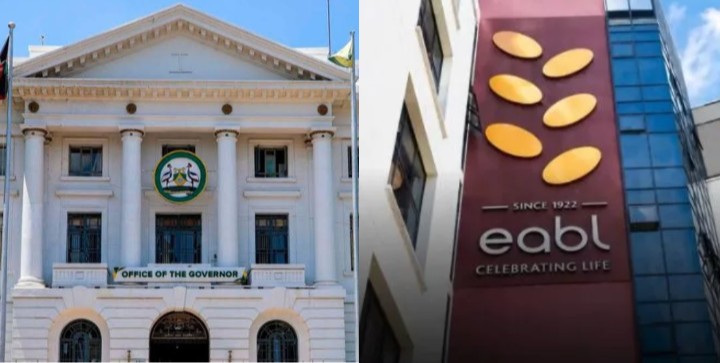
Nairobi City County has intensified its push to collect unpaid revenue from major alcohol manufacturers, claiming that East African Breweries Limited (EABL) owes KSh924 million in outstanding liquor licensing fees.
The county government says the amount was established through an internal audit and is now seeking to recover the money under the Nairobi City County Alcoholic Drinks Control and Licensing Act, 2014, and the Finance Act, 2026.
Chief Officer for Business and Hustlers Opportunities Lydia Mathia said the county had held several meetings with EABL in an attempt to resolve the matter but had yet to reach an agreement with the company.
“After rigorous internal audit scrutiny, EABL owes Nairobi County Ksh.924 million in outstanding liquor licensing arrears. We have held meetings with the company and extended an olive branch to address the matter, but our efforts to negotiate a resolution have not yielded the desired outcome,” Mathia said.
The county has also raised concerns over what it describes as a significant difference between the licensing fees paid by EABL in Nairobi and the amounts collected from other major beverage manufacturers in neighbouring counties.
According to Mathia, EABL’s historical licensing contribution to Nairobi County has been approximately KSh1 million, while some major beverage manufacturers in neighbouring counties pay as much as KSh9 million.
She argued that the difference raised questions about fairness in the licensing system, particularly when smaller businesses were expected to comply with county regulations while the licensing obligations of major manufacturers remained unresolved.
Mathia also dismissed arguments that alcohol manufacturers should not pay county liquor licensing fees because they already remit excise duty and corporate income tax to the Kenya Revenue Authority (KRA).
She maintained that the two payments serve different purposes and that paying national taxes does not automatically exempt manufacturers from meeting their county licensing obligations.
The county cited the Fourth Schedule of the Constitution of Kenya, Part 2, Paragraph 4(c), which assigns county governments the responsibility of regulating liquor licensing. Mathia said Nairobi had the legal mandate to collect the fees and regulate the sector within its jurisdiction.
She added that recovering the disputed revenue was important because the money was intended to support public services, including healthcare, water supply and road infrastructure.
“This is public money that belongs directly to Nairobians who stand in line for healthcare, water and proper roads,” Mathia said, adding that the county would pursue all amounts established to be lawfully due.
The dispute has also involved the Alcoholic Beverage Association of Kenya (ABAK), whose representatives met Nairobi County officials on October 14, 2026, to discuss the licensing framework and the charges facing alcohol manufacturers.
Mathia said ABAK later obtained court orders restraining the implementation of the contested measures. The county stated that it would respect the court orders as it pursues the matter through the legal process.
Industry representatives have raised concerns that additional county charges could amount to double taxation, considering that manufacturers already pay taxes to the national government.
However, Nairobi County maintains that liquor licensing falls under a separate legal framework and that businesses must comply with the requirements applicable to their operations.
The county is also pursuing changes aimed at simplifying business licensing and improving revenue collection. These include the Unified Business Permit and LiquorPay, a digital licensing system intended to make the process more efficient and transparent.
The outcome of the dispute could help clarify the licensing obligations of major alcohol manufacturers operating in Nairobi, particularly as the county seeks to enforce its revenue collection measures while the matter remains subject to court proceedings.