


Images shared widely on social media showing Kakamega Governor Fernandes Barasa drinking busaa while under police protection have stirred strong reactions among residents and the wider public.
The photos have become a talking point in villages, towns, and online platforms, with many people questioning what the incident means for fairness, leadership, and the way laws are enforced in the country.
Busaa is a traditional brew that has been part of community life for many years, especially in western Kenya. It is commonly consumed during social gatherings, cultural events, and family ceremonies. Despite its long history, the production and sale of busaa are regulated by law.
Brewers and sellers are required to have licenses, and those found operating without them often face arrest, fines, or the destruction of their brewing equipment.
For many residents, the images of the governor drinking busaa openly while guarded by uniformed police officers present a sharp contrast to their daily experiences. In many villages, police regularly conduct raids targeting homes where busaa is brewed or sold. These operations sometimes happen early in the morning or late at night, leaving families shocked and unprepared. Stock is poured away, containers are seized, and arrests are made, sometimes without clear explanations.
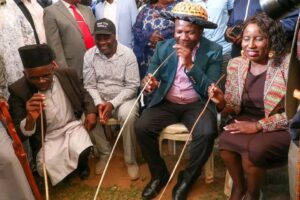
Photos of Kakamega governor Fernandez Barasa during busaa drinking session. Photo Courtesy/The Kenya Times.
This difference in treatment has caused anger and disappointment among locals. Many feel that the law is applied differently depending on who is involved. While powerful leaders appear free to enjoy the drink without interruption, ordinary citizens face harsh consequences for the same activity.
To residents, this sends a troubling message that status and position can shield someone from the law.
Small-scale brewers have also spoken about the economic side of the issue. For many families, busaa brewing is not just about alcohol but survival.
In areas with limited job opportunities, the income from brewing helps pay school fees, buy food, and meet basic needs. Women, in particular, form a large part of this trade, using it to support their households. When police crackdowns happen, these families are often left with nothing to fall back on.
The presence of police officers guarding a public figure as he drinks busaa has deepened feelings of mistrust toward law enforcement.
Residents say police seem quick to act against the poor but cautious or silent when leaders are involved. This perception weakens confidence in the justice system and raises doubts about whether everyone is truly equal before the law.
Others have pointed out that leaders are expected to set an example. In a county where many people have suffered losses due to alcohol-related crackdowns, such images can be seen as insensitive. Even if no law was broken, the public display has reopened old wounds and reminded many of past encounters with enforcement officers.