

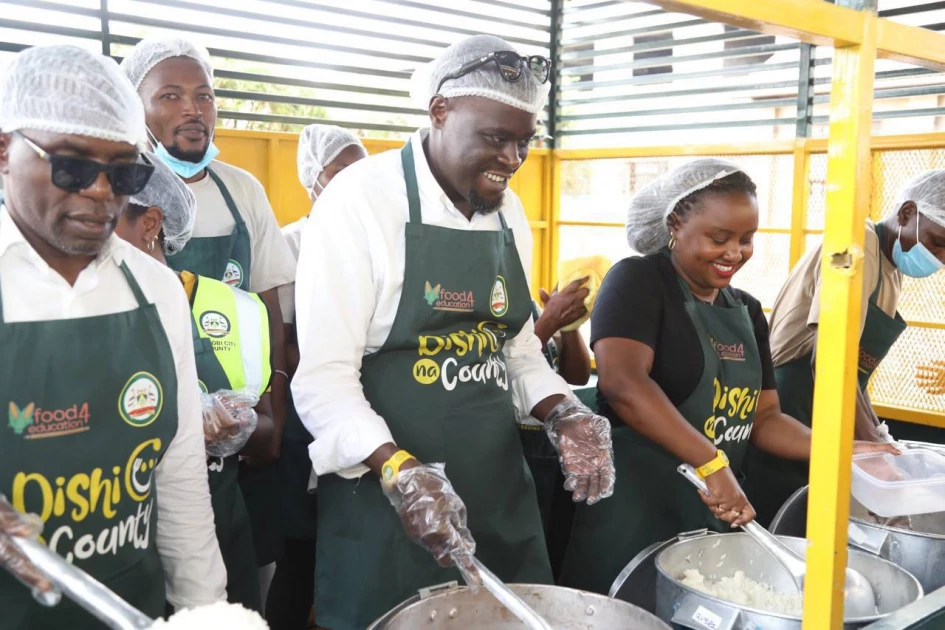
Parents across Nairobi are raising the alarm after their children fell ill from meals handed out under the county’s school feeding scheme, with complaints pointing straight at poorly prepared food served in the name of free chapati. The outcry has exposed deep cracks in Governor Johnson Sakaja’s Dishi Na County programme, a project once sold as a solution for hungry learners but now accused of putting young stomachs at risk.
In a post shared on Friday by popular blogger Cyprian Nyakundi, a concerned parent wrote that their children had been suffering stomach problems and knew exactly where the trouble started. The parent accused the programme of serving raw chapati to Nairobi learners, a claim that quickly spread and drew sharp reactions from residents already frustrated with the state of public services under Sakaja’s watch.
The Dishi Na County initiative was launched with big promises. County officials claimed it would deliver hot, nutritious meals to thousands of primary school children every day, easing the burden on poor families and improving attendance.
Yet reports of undercooked food, delayed deliveries and inconsistent quality have followed the programme almost from the start. Parents now say the chapati arriving in classrooms is often half-done, doughy and unsafe. Children return home complaining of stomach pains, and some have skipped school rather than risk another bad meal.
Sakaja has repeatedly defended the project as a flagship achievement. He has appeared at photo opportunities in school kitchens, praised the partnership with national government agencies, and insisted that standards are monitored. But the latest complaints suggest monitoring is either weak or ignored.
No clear public explanation has been given for how raw chapati continues to reach plates, or whether suppliers and kitchen staff face real consequences when food is unfit to eat.
Nairobi residents point to a pattern of grand announcements followed by weak delivery. Roads remain unfinished, garbage piles up in estates, and water shortages drag on while the governor talks of transformation deals worth tens of billions of shillings. The school feeding programme was meant to show that City Hall could look after ordinary families. Instead it has become another example of a scheme that looks good on paper and fails on the ground.
Parents who cannot afford private school lunches are left with few options. Some now pack food from home even when they struggle to put meals on the table. Others simply tell their children to refuse the county chapati. That is a damning verdict on a programme that was supposed to help the most vulnerable. When free food makes children sick, the failure is not small. It is a direct hit on public trust.
Sakaja’s administration has yet to issue a detailed response to the latest claims. County officials have previously insisted that food safety rules are followed and that any problems are quickly fixed. Those assurances ring hollow against the growing number of parents who say their children are paying the price.
The pressure is rising on the governor to stop the photo opportunities and fix the kitchens. Nairobi’s children deserve better than raw chapati and empty promises.