

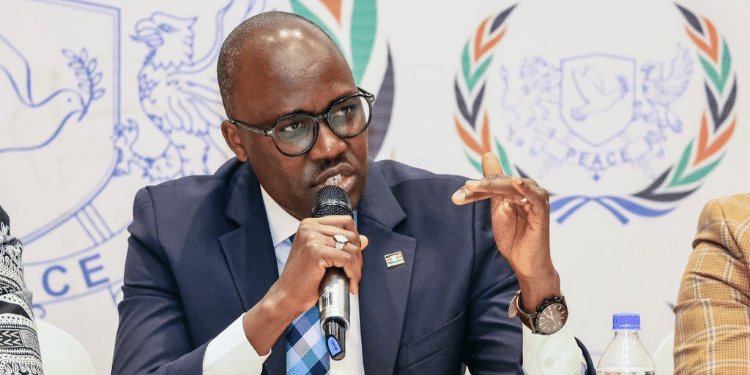
Kenya’s Ministry of Foreign Affairs is confronting internal tension as ongoing reforms begin to dismantle long standing administrative practices and introduce stricter controls on expenditure and performance.
The changes, associated with PS Dr. Korir Sing’oei, are centred on reducing waste, improving accountability, and aligning diplomatic activity more closely with national economic and strategic priorities.
Among the most consequential measures is the review and downscaling of mission expenditure, including rental costs that had reached an estimated KSh 3 billion annually.
The restructuring seeks to align resource allocation with output, placing greater emphasis on efficiency across Kenya’s diplomatic network.
In addition, the ministry has standardised insurance policies across regions. Missions in the Americas now operate under a unified plan, Europe under a structured tiered system, and Africa under a tailored framework designed to optimise coverage and cost. Officials say this approach is intended to eliminate duplication and secure better value through scale.
These interventions have disrupted systems that had evolved over time with varying degrees of oversight. In such circumstances, resistance is often inevitable.
Individuals familiar with the transition point to growing friction between reform objectives and established practices, particularly where tighter controls affect discretionary processes.
This has coincided with a rise in criticism directed at PS Dr Korir Sing’oei, reflecting the broader impact of the changes on internal dynamics.
At the same time, sections of the diplomatic corps are said to support the reforms, viewing them as essential to restoring discipline, coherence, and credibility within the foreign service.
Externally, Kenya continues to advance a Kenya first policy while expanding its diplomatic footprint. The upcoming African French summit in May underscores efforts to build influence and strengthen Kenya’s role as a regional and international interlocutor.
The intersection of internal reform and external ambition has placed the ministry at a defining moment.
As oversight tightens and expectations increase, officials close to the process indicate that the reform agenda will not be reversed. PS Dr. Korir Sing’oei is understood to be determined to continue with the changes, positioning them as necessary for long term national benefit despite the resistance they have attracted.