
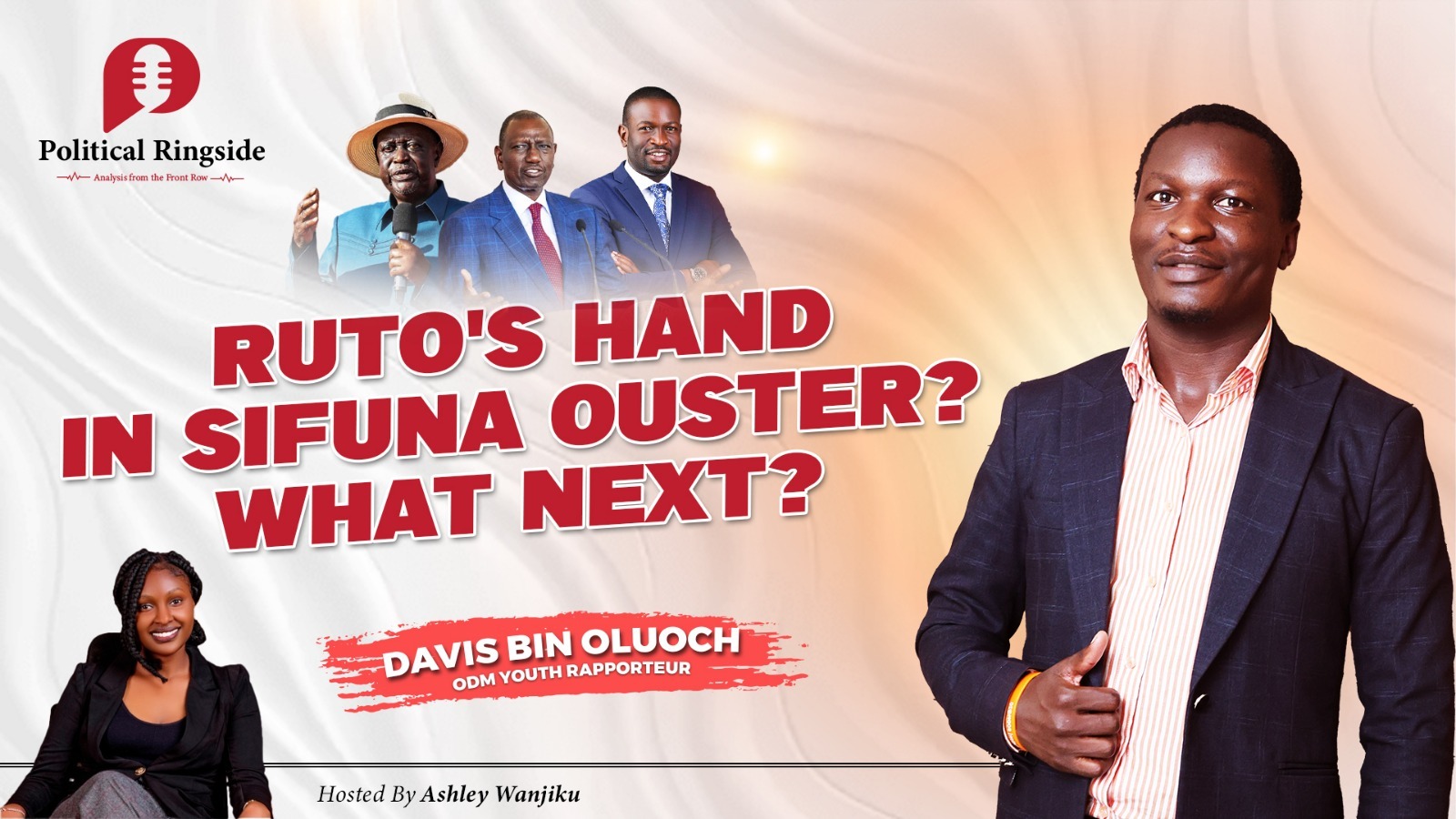
The episode centers on whether President William Ruto had any role in the removal of Edwin Sifuna as Secretary General of the Orange Democratic Movement, and it moves straight to examining how and why that decision was made.
The discussion does not wander. It asks if the change was driven by outside pressure or by choices within the party itself, and what that means for ODM going forward.
The conversation takes place on Political Ringside, a political talk show that focuses on current power moves in Kenya. The host, Ashley Wanjiku, guides the discussion with guest Davis Bin Oluoch. Davis brings first-hand knowledge, having worked closely with the party for several years.
His role allows him to explain party processes rather than rely on guesswork.
Edwin Sifuna had become known for openly criticizing the government and President Ruto. His removal followed public remarks by the president about the need for discipline in political parties.
Around the same time, John Mbadi, a former ODM leader now serving in government, publicly called for Sifuna to step aside. Because these events happened so close together, many people began to suspect that the government may have influenced the decision.
Davis explains that the choice to remove Sifuna was made through ODM’s own structures. He lists meetings of key party organs, including gatherings held in Vipingo and Malindi.
According to him, there was no formal discussion about President Ruto’s statements during these meetings. Instead, leaders focused on internal party matters such as by-elections and leadership gaps.
He notes that while informal conversations always happen in politics, no official record shows direct orders from outside the party.
The episode also reflects on the role of Raila Odinga, who is described in the discussion as a unifying figure who kept different groups within ODM balanced.
The talk suggests that after his reported absence from active leadership, voices favoring closer cooperation with the government became louder.
Leaders like Mbadi and others are seen as open to working with State House, while figures such as Winnie Odinga and Babu Owino have taken a more critical stance toward the government. Davis believes Sifuna’s position might have been safer if the party’s old balance of power was still intact.
On the question of pressure from State House, Davis says there is no clear proof of direct involvement.
He does, however, point to indirect influence. Statements from the president about ODM needing to put its house in order match the thinking of some party members who want future cooperation with the government.
The role of young members also comes up. Davis says the ODM Youth League is holding meetings, including one in Machakos, to decide how to defend the party’s independence.
He stresses that young members are ready to speak up if they feel the party is drifting away from its values.
By the end, the episode presents two clear paths for ODM. One path involves closer ties with the government ahead of future elections.
The other focuses on rebuilding the party around its original ideas with younger leaders. The discussion avoids firm conclusions and instead shows how internal party choices, more than rumors, will shape what comes next for Kenyan opposition politics.