
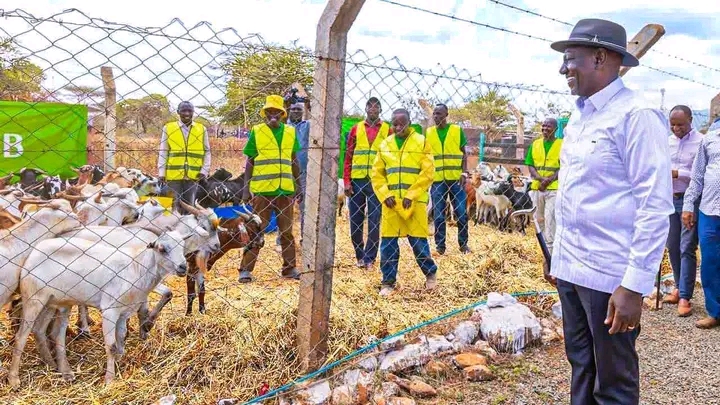
Farmers in Baringo County have raised serious concerns over unpaid goats following the high-profile Kimalel goat auction held in December, an event that was officiated by President William Ruto and valued at approximately KES 82 million.
The farmers now claim that months after the auction, a significant number of them have not received payment for livestock that was collected and sold during the event.
The Kimalel goat auction was organised as part of a government-backed livestock commercialisation programme aimed at empowering pastoralist communities and linking farmers to large markets.
The event attracted national attention after President Ruto personally attended and promoted it as a model for boosting incomes in arid and semi-arid regions.
However, farmers from Kimalel and surrounding areas now say the initiative has turned into a nightmare.
According to several affected sellers, they delivered their goats to collection centres, signed documentation, and were assured that payments would be processed within weeks.
Instead, many claim they are still waiting for their money, with some reporting losses running into hundreds of thousands of shillings.
“We were told the government would ensure prompt payment. Our goats were taken, but up to now, there is no money,” said one farmer, who requested anonymity.
Farmers allege that middlemen and organisers involved in the auction have gone silent, while local officials have been unable to give clear explanations. Some claim that only a small fraction of sellers were paid, while the majority remain in limbo.
The controversy has embarrassed the government, especially given that the auction was publicly endorsed by the President.
Critics argue that the situation undermines the credibility of state-led economic empowerment programmes and exposes farmers to exploitation under the guise of development initiatives.
For farmers struggling with drought, high input costs, and market instability, the unpaid goats represent not just financial loss but a breach of trust.