
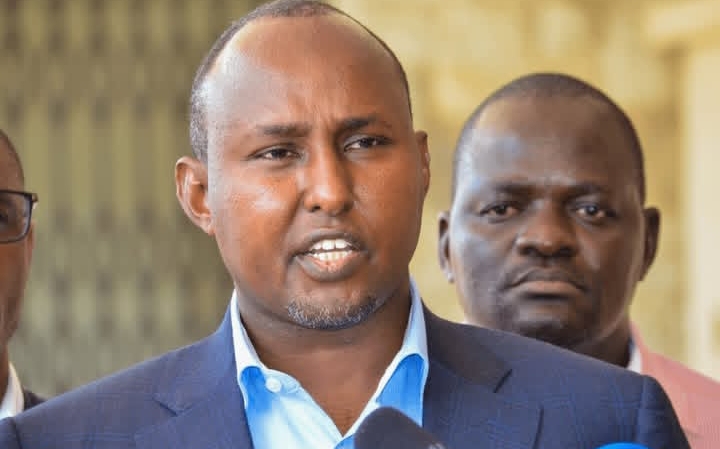
The discussion around Junet Mohamed has taken a new direction following the death of Raila Odinga, and it has placed him under closer public attention than before. For many years, Junet was known mainly as Raila’s loyal ally within ODM and in Parliament.
He defended party positions strongly and was seen as one of the voices that carried Raila’s political line. With Raila no longer around, people have started questioning how leaders like Junet will operate without that central figure guiding the party.
The term “political orphan” has been used widely in public conversations, especially on social media. In this context, it is not meant as an insult alone but as a way of questioning independence and direction.
Some Kenyans believe that certain politicians depended too much on Raila’s influence and popularity. Junet has rejected this label, saying he is still a leader in his own right and capable of moving forward. His response shows that he is aware of the changing political environment and the pressure that comes with it.
However, public opinion does not always follow political explanations. Many voters now want to see individual leaders stand on their own records. In Junet’s case, attention has shifted to what he has delivered for Suna East and how connected he remains to the people who elected him.
Some online comments suggest that he focused more on national politics and party battles than on local needs. Whether fair or not, these views are becoming louder because Raila is no longer there to absorb criticism aimed at ODM leaders.
Kabz Nya Kisii has become one of the voices reflecting this public mood. Through her social media posts and videos, she comments on political events in a way that resonates with ordinary Kenyans. Her use of the phrase “amefikiwa” in relation to Junet suggests that a moment of reckoning has arrived.
The message many take from her content is that politicians must now answer directly to the public, not hide behind party loyalty or past alliances.
What makes such commentary influential is that it speaks from outside formal political structures. Kabz Nya Kisii does not represent a party or an institution. She represents a growing group of citizens who use online platforms to question leaders openly.
Her post about Junet fit into a wider discussion about accountability and relevance in a post-Raila political landscape.
Junet, on his part, continues to express confidence in ODM’s future. He has said the party will remain strong and competitive going into the next election. He also insists that ODM belongs to the people, not to one individual.
These statements aim to reassure supporters, but they also raise expectations. If the party truly belongs to the people, then leaders like Junet will be judged more closely on performance and connection with voters.
The situation facing Junet is not unique. Many politicians who rose under strong figures now face the same test. The difference is that Junet has been more visible and outspoken than most. That visibility now works both for and against him. Supporters still see experience and loyalty, while critics see unfinished work and unanswered questions.