

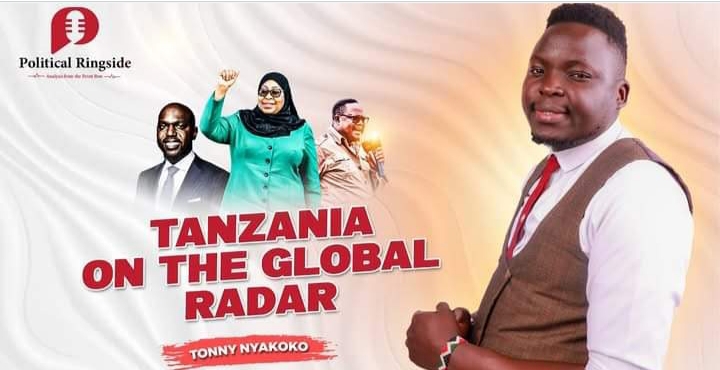
Political Ringside, a YouTube show hosted by political analyst Tonny Nyakoko, has examined Tanzania’s tense situation following the October 29, 2025 general election, pointing to a country facing deep political strain rather than ordinary post-election disagreements.
In the analysis, Nyakoko explains that the unrest grew out of serious doubts about the credibility of the vote and the way the state responded to public anger in the days that followed.
The election results, which gave President Samia Suluhu Hassan an overwhelming victory, immediately raised concern among many citizens.
Questions emerged about how such numbers were achieved in an environment where key opposition figures had been arrested, restricted, or removed from the race altogether. This left many voters feeling that the contest was decided long before ballots were cast, weakening trust in the process and fueling frustration across the country.
Soon after the announcement, protests broke out in several major towns. These demonstrations were largely driven by young people who felt excluded from political decision-making and worried about their future. What began as calls for transparency and justice quickly turned tense as security forces moved in. Reports of shootings, arrests, and disappearances circulated widely, creating fear in neighborhoods that had rarely seen such levels of political violence.
While the government downplayed these claims and blamed unrest on criminal elements, the atmosphere of uncertainty deepened.
The response from the authorities became a major focus of public debate. Curfews were introduced, protests were banned, and large numbers of security officers were deployed in city centers.
Digital restrictions made it harder for people to communicate or share information, adding to anxiety and rumors. For many citizens, these measures felt like collective punishment rather than efforts to restore calm, pushing anger further underground instead of resolving it.
Youth activism remained a central feature of the unrest. Even as open demonstrations became risky, frustration did not disappear.
Conversations shifted to private spaces and online platforms where possible, showing that the underlying issues were far from settled.
Many young Tanzanians continued to demand accountability, justice for those affected by violence, and meaningful political reforms.
International attention also intensified as the situation unfolded. Human rights organizations and foreign governments called for restraint and independent investigations into the use of force. Tanzania, long seen as a stable country in the region, suddenly found itself under scrutiny.
Investors, regional leaders, and civil society groups began questioning what the crisis meant for governance and democratic standards in East Africa.
The analysis suggests that what started as a disputed election has exposed deeper problems in Tanzania’s political system. The combination of limited political space, forceful state action, and unresolved public anger has created a fragile situation.
Without dialogue and genuine reforms, the calm on the streets may hide tensions that could resurface, leaving the country at a crossroads in its political future.