

For many Kenyan motorists, the promise of technology was supposed to make life easier. Digital services were meant to reduce queues, save time, and allow people to access government services from their phones.
Instead, the latest traffic enforcement system has left many asking whether technology is being used to improve road safety or simply make it easier to collect money.
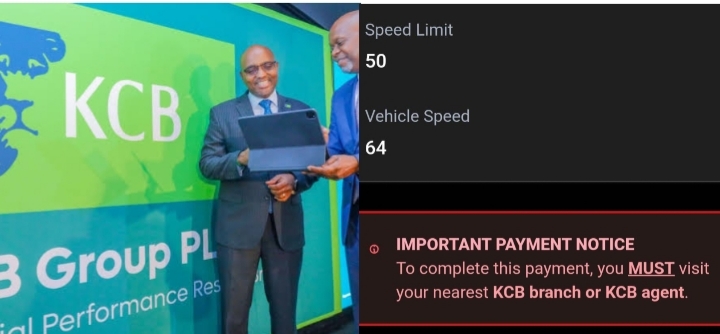
The controversy centers on the partnership between the National Transport and Safety Authority (NTSA), KCB Group, and other private partners in the rollout of automated traffic fines. Under the system, motorists receive notifications from speed cameras showing the alleged offence and the amount owed. However, what has drawn criticism is the payment process itself.
Drivers who receive the notices are instructed to make payments through KCB branches or KCB agents. For many Kenyans, this requirement has raised serious questions. In a country that has become a global leader in digital payments through mobile money and online banking, many motorists are struggling to understand why they must physically visit a KCB outlet to settle fines.
The situation becomes even more frustrating when penalties are tied to strict timelines. Failure to pay within the required period can attract additional charges and may lead to restrictions on access to NTSA services.
This means motorists risk being unable to renew licences, transfer vehicle ownership, or complete other essential transactions until the fines are cleared.
Critics argue that the arrangement appears to place KCB at the center of a process that should be as accessible and convenient as possible.
While NTSA has explained that the payment model is part of a pilot phase aimed at reducing fraud and preventing fake payment requests, many Kenyans remain unconvinced.
They question why alternative payment methods such as M-Pesa, bank transfers, mobile banking applications, USSD services, and government digital platforms have not been fully integrated from the beginning.
The concerns go beyond convenience. Many motorists see the mandatory use of a single banking network as creating unnecessary barriers.
A driver in a remote area may have to travel long distances to find a KCB branch or agent. Others may be forced to leave work during business hours to make payments. What should be a quick digital transaction can become a time-consuming and costly process.
Questions are also being raised about transparency. Motorists want to know how camera readings are verified, what mechanisms exist for challenging fines, and whether there is an independent process for handling disputes.
Some have argued that before penalties are enforced, there should be a clear and accessible appeals system that allows drivers to contest alleged violations.
Road safety remains an important national priority. Excessive speeding contributes to accidents and loss of life, and effective enforcement is necessary. However, enforcement measures must also be fair, transparent, and convenient for the public. Technology should reduce burdens on citizens rather than create new ones.
Pressure is growing on both NTSA and KCB to provide greater clarity on how the partnership operates and why payment options remain limited.
Many motorists believe that if the goal is truly safer roads, then the process should prioritize accessibility, transparency, and public trust.
Until payment options are introduced and concerns are addressed, many Kenyans are likely to view the current arrangement not as a modern solution, but as a system that places unnecessary pressure on motorists while directing them toward a single financial institution.
The growing public backlash suggests that what was presented as smart enforcement may instead become a major test of confidence in both NTSA and KCB.