

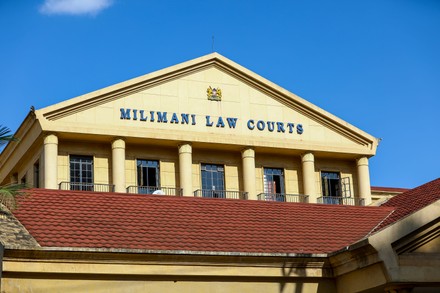
The High Court has delivered a major setback to the government after overturning its directive that banned live coverage of the June 25 demonstrations.
The directive, which had been issued through the Communications Authority, had ordered all media houses to stop broadcasting the protests in real time. Justice John Chigiti ruled that the case filed by the Katiba Institute proved that the government’s order was unlawful and unconstitutional. He quashed the directive entirely and prohibited the Communications Authority or any other state agency from enforcing it either now or in the future.
This ruling means the government will no longer have the power to shut down or ban live broadcasts of demonstrations.
According to the court, such actions violate the fundamental rights of Kenyans and cannot stand in a democratic nation. The decision has been welcomed by media groups, human rights defenders, and civil society organisations, who had warned that the directive posed a serious threat to freedom of expression and press freedom in the country.
The case began after the Law Society of Kenya, the Kenya Editors Guild, and the Katiba Institute jointly challenged the Communications Authority’s decision on June 25. They argued that the CA had violated three important constitutional rights: the freedom of expression, the freedom of the media, and the right to access information under Articles 33, 34, and 35 of the Constitution. According to the petitioners, the government had no lawful basis for restricting the media from covering events of national interest.
The Communications Authority had earlier ordered all television and radio stations to halt live coverage, warning that failure to comply would attract regulatory penalties under the Kenya Information and Communications Act.
The directive, signed by CA Director General David Mugonyi, claimed that broadcasting the protests violated the Programming Code and intensified public disorder. However, many human rights groups dismissed these claims, stating that the ban was meant to hide cases of police brutality and unlawful arrests.
The ruling now adds to a growing list of court decisions aimed at protecting democratic rights in Kenya. In August last year, the High Court also directed all police officers to wear uniforms and display nametags while handling protests. This was after concerns were raised about officers wearing balaclavas to hide their identities during the anti-Finance Bill 2024 demonstrations. Justice Chigiti further ordered that the National Police Service must ensure that all police vehicles used in protests have visible identification, registration numbers, and official markings.
These decisions continue to strengthen accountability within state agencies and protect the rights of citizens who participate in demonstrations. They also affirm the crucial role of the media in documenting events as they unfold, ensuring transparency and promoting public awareness in times of national importance.