

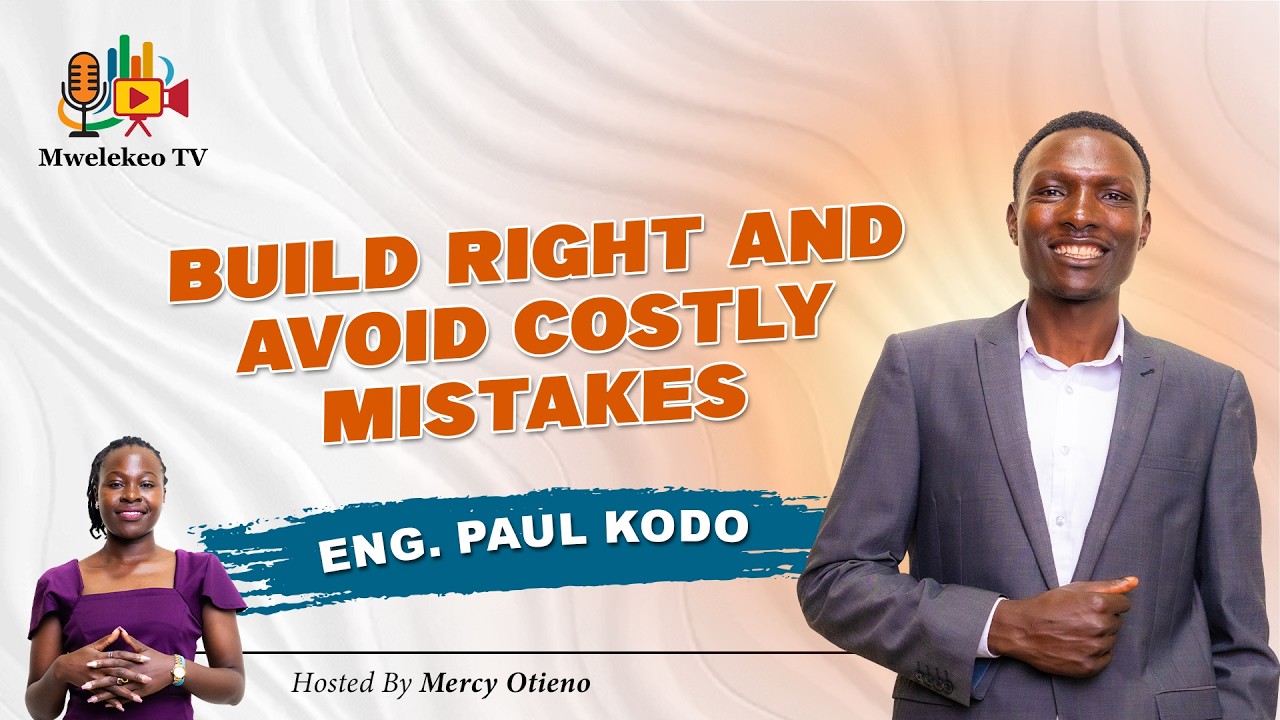
In a recent episode of Mwelekeo TV, viewers were taken through important lessons on safe construction practices in Kenya. The discussion featured structural engineer Eng. Paul Kodo, who shared practical advice aimed at helping individuals avoid common mistakes that often lead to financial losses, unsafe buildings, and costly repairs. As more Kenyans invest in homes and property developments, the need for proper planning and professional guidance has become increasingly important.
Understanding the Role of a Structural Engineer
During the interview, Eng. Kodo explained that he is a civil engineer specializing in structural engineering.
His work involves ensuring that buildings are designed and constructed to remain stable, safe, and durable throughout their lifespan.
Whether it is a high-rise building in a city or a family home in a rural area, structural engineers play a critical role in making sure structures can safely support their intended loads.
He shared that his interest in engineering began while he was still in high school. Fascinated by how engineers design skyscrapers, bridges, and other major structures, he developed a passion for the profession. After studying at the Technical University of Kenya, he built a career that now involves both design work and construction site inspections across different parts of the country.
Different Areas of Civil Engineering
Eng. Kodo noted that civil engineering is a broad profession with several specialized fields.
Structural engineers focus on the strength and stability of buildings. Transport engineers work on roads, highways, and transportation systems. Geotechnical engineers assess soil conditions and foundations, while water engineers deal with water supply systems, drainage, and flood management.
According to him, no single engineer can fully master every branch of civil engineering. Instead, specialists work together to ensure projects are completed successfully. Understanding these different roles helps property owners know which professionals they need at various stages of construction.
Common Mistakes Made During Construction
One of the main concerns raised during the discussion was the tendency by some builders to skip important planning stages. Eng. Kodo explained that many construction problems begin long before the actual building work starts.
Some of the most common mistakes include failing to prepare a realistic budget, hiring unqualified contractors, ignoring soil testing requirements, and making changes to approved building designs without professional advice. While such shortcuts may appear to save money at first, they often result in expensive corrections later.
He emphasized that professional supervision should begin from the planning stage and continue throughout construction. Structural engineers help review designs, inspect materials, and monitor ongoing work to ensure that the final structure matches approved plans and safety standards.
The Importance of Site Inspections
Eng. Kodo also spoke about his daily responsibilities, which combine office work and field visits. While modern software helps engineers create detailed designs, site inspections remain essential.
Regular visits allow professionals to identify mistakes early and recommend corrections before problems become serious.
This hands-on approach helps improve quality and ensures that builders follow the approved construction procedures. It also helps property owners gain confidence that their investment is being handled correctly.
Building Safely for the Future
The discussion highlighted the importance of responsible construction in supporting Kenya’s growth and development. Safe buildings provide long-term value for families, businesses, and communities.
On the other hand, incidents involving collapsed buildings demonstrate the serious consequences of poor planning and inadequate supervision.
Eng. Kodo encouraged Kenyans to work with qualified professionals, conduct proper soil investigations, use clear contracts, and carry out regular inspections during construction.
These steps may require additional planning, but they can prevent significant losses and improve safety.
The episode served as a reminder that construction is not simply about putting up walls and roofs. It is a process that requires careful planning, technical expertise, and attention to detail.
By seeking guidance from experienced professionals such as Eng. Paul Kodo, aspiring homeowners and developers can make informed decisions that lead to stronger, safer, and more reliable buildings for generations to come.