

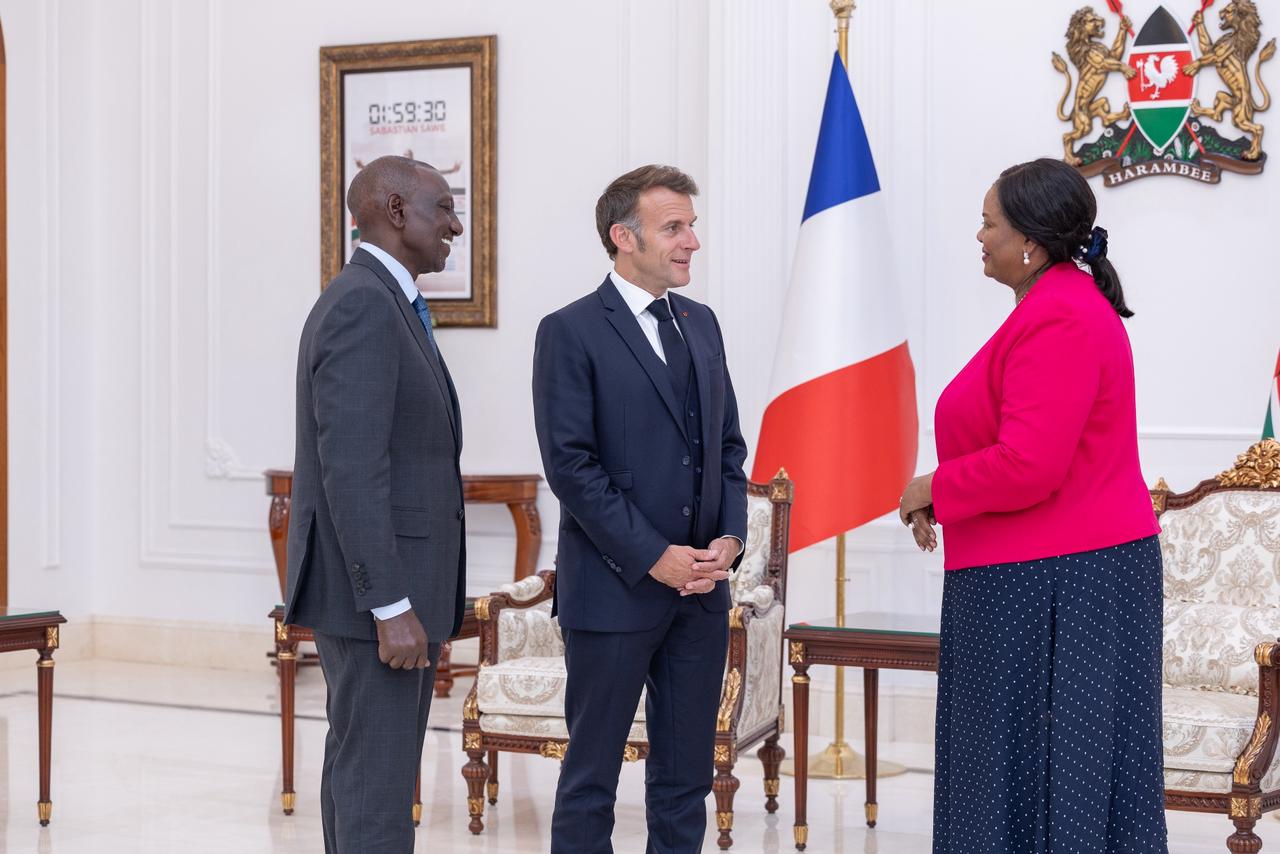
Justice Njoki Ndung’u has recently been part of Kenya’s wider diplomatic engagements as the country seeks international backing for her nomination as a judge at the International Criminal Court in The Hague. Her candidacy has become one of the key talking points in Kenya’s discussions with visiting world leaders during high-level meetings taking place in Nairobi.
The timing of these engagements has aligned with the Africa Forward Summit, a major gathering co-hosted by Kenya and France that began on May 11 and runs until May 12, 2026. The summit brings together African heads of state, international partners, and private sector leaders to discuss issues such as innovation, economic growth, sustainable development, and stronger global partnerships.
Among the leaders attending is French President Emmanuel Macron, whose presence has added weight to the diplomatic discussions taking place alongside the official agenda.
Kenya has been using this opportunity to build support for Justice Njoki Ndung’u ahead of the International Criminal Court elections scheduled for December 2026, where six judicial positions will be filled.
President William Ruto and other senior officials have been engaging visiting leaders in both formal and informal settings to encourage backing for her nomination. In recent days, discussions have also included leaders such as Liberia’s President Joseph Boakai and Sierra Leone’s President Julius Maada Bio, reflecting Kenya’s effort to widen diplomatic support across Africa.
Justice Ndung’u is widely known in Kenya’s legal circles for her long service in the judiciary. She has served as a Supreme Court judge since 2011 and has been involved in several important legal decisions in the country.
Before joining the bench, she worked with the United Nations High Commissioner for Refugees as a protection officer, a role that exposed her to refugee and human rights issues. She also served as a political analyst with the African Union, which gave her experience in regional governance and conflict-related matters.
Her earlier public service includes her time as a nominated Member of Parliament from 2003 to 2007, during which she contributed to the development of the Sexual Offences Act aimed at addressing gender-based violence. She has also represented Kenya in the Pan-African Parliament and participated in the drafting of the 2010 Constitution as part of a team of experts. These roles have often been highlighted by supporters as evidence of her experience in law reform and justice systems.
Kenya’s judiciary leadership, including Chief Justice Martha Koome, has been involved in discussions around her nomination together with government officials. The government views her candidacy as part of a broader effort to ensure Kenya maintains a strong presence in international legal institutions. If elected, she would join other judges at the ICC responsible for handling cases involving serious international crimes.
The Africa Forward Summit has created a busy diplomatic environment in Nairobi, with many bilateral meetings taking place on the sidelines. While the main focus remains on development and economic cooperation, such gatherings often provide space for countries to discuss broader international priorities, including support for candidates in global institutions.
Kenya is expected to continue its diplomatic outreach. The campaign for Justice Ndung’u reflects both her personal legal background and Kenya’s broader ambition to play a more active role in shaping international justice systems.