

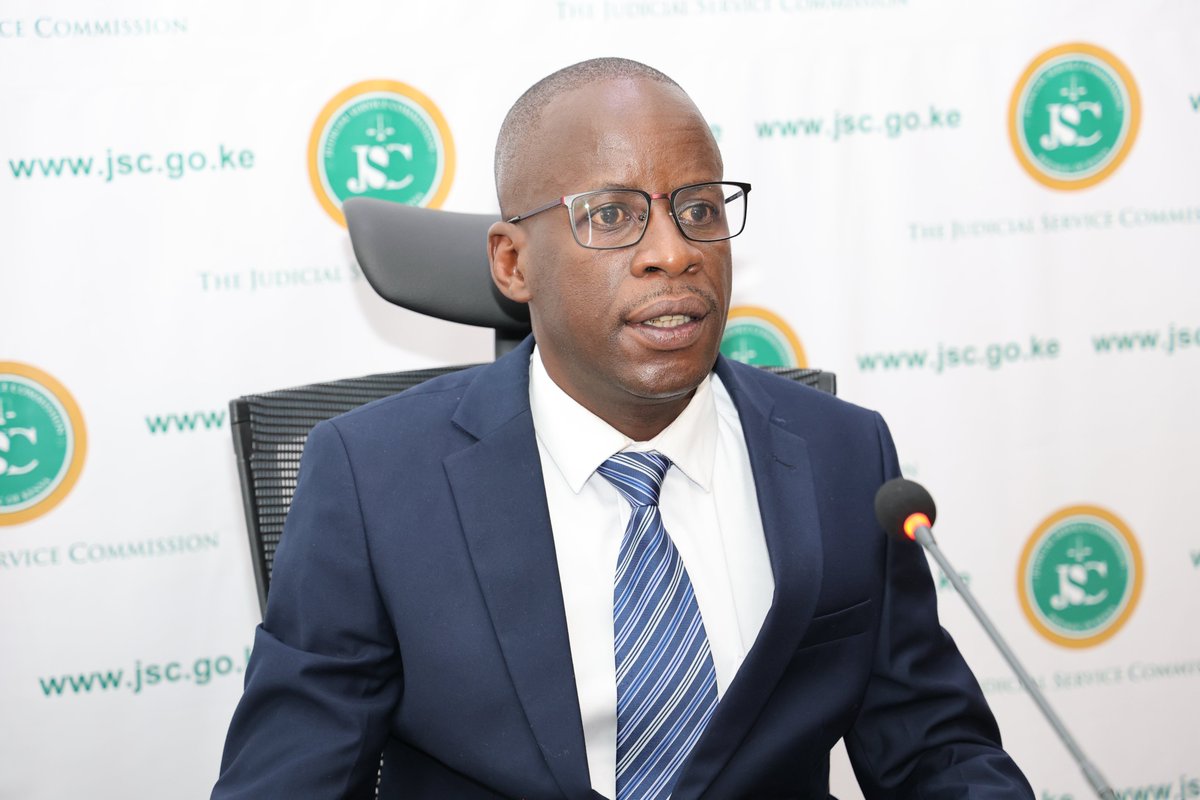
Chief Magistrate Nathan Shiundu Lutta came under sharp questioning during his interview before the Judicial Service Commission for promotion to High Court Judge, with commissioners focusing on how he handled a defilement case involving a police officer accused of defiling his own daughter.
The questions centered on his decision to grant bail to the accused officer, even after he fled the country, raising concerns about judgment, discretion, and protection of a minor victim in a serious sexual offence case.
During the interview before the Judicial Service Commission, Commissioner Omwanza Ombati pressed Lutta to explain why the accused officer was granted cash bail.
The case had drawn public attention because of the seriousness of the charge and the relationship between the accused and the child.
Lawyer Nelson Havi, who initially prosecuted the matter, had secured the arrest of the policeman. However, after being released on bail, the officer fled to Tanzania. He was later returned to Kenya through the help of Interpol.
Despite the clear flight risk shown when the accused escaped, the court again granted him cash bail upon his return. This decision became one of the most controversial aspects of the case.
Havi has publicly expressed frustration, saying the repeated release of the accused deeply disappointed him. He also stated that he arranged witness protection for the child victim, but reports later indicated that the child was still contacted or reached in some way, raising concerns about the effectiveness of the safeguards.
Havi further alleged that the policeman’s father sold land to raise money for legal fees and to allegedly bribe officials at the Office of the Director of Public Prosecutions and the magistrate involved in the case.
He publicly accused Lutta of being compromised and argued that the commission should not promote him to the High Court. According to Havi, nothing in his legal career had frustrated him more than the handling of this matter.
The discussion around Lutta’s interview has highlighted three key lessons for judicial officers. First, claiming judicial independence may shield a magistrate from complaints in the short term, but during promotion interviews, the JSC reviews past decisions closely to assess integrity and public confidence. Independence does not excuse poor judgment or misconduct.
Second, a finding that there is a “case to answer” should not be made casually.
Such a ruling means the court believes the prosecution has presented strong evidence that could lead to a conviction. If the evidence is weak, an acquittal should follow.
Requiring an accused person to give a defense when the evidence is insufficient risks weakening the fairness of the trial and shifting the burden of proof.
Third, the issue of bribery was strongly discussed in public commentary. Judicial officers are expected to resist any attempt at influence. Even if a ruling is not overturned on appeal, misconduct findings can still end a judicial career.
The example often cited is that of Joseph Mutava, who lost his position after misconduct findings related to a major case involving Kamlesh Pattni in the Goldenberg scandal.