


The 4th Global Tourism Resilience Day Conference and Expo was held from February 16 to 18, 2026, at the Kenyatta International Convention Centre in Nairobi, Kenya, marking the first time this global event took place in Africa where by Prime CS Musalia Mudavadi was the chief guest.
The conference brought together ministers, policymakers, tourism industry leaders, academics, development partners, and other stakeholders from around the world to focus on strengthening the tourism sector against crises.
The main goal was to move beyond responding to immediate challenges and instead build systems that allow tourism to recover faster and grow stronger.
The theme of the conference, “Tourism Resilience in Action: From Crisis Response to Impactful Transformation,” guided discussions on how tourism can better handle issues such as climate change, health emergencies, economic shocks, and geopolitical events.
Participants explored strategies to ensure tourism contributes to sustainable development while remaining flexible and adaptive.
The United Nations recognizes February 17 as Global Tourism Resilience Day, a designation established in 2023 following a resolution initiated by Jamaica and supported by many nations.
The day emphasizes tourism’s role in creating jobs, boosting economic growth, fostering cultural exchange, and driving sustainable development, while also highlighting the risks that the sector faces from various crises.
Several key topics were covered during the event. These included integrating resilience into national policies and legislation, securing funding for infrastructure and climate adaptation, and using data, artificial intelligence, and technology to predict and manage risks.
Protecting natural resources and promoting climate-friendly tourism practices were highlighted as essential steps.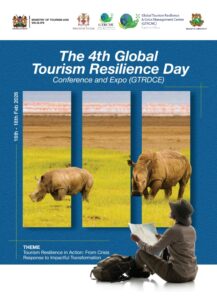
Participants also stressed the importance of inclusion, ensuring that women, youth, and local communities benefit equitably from tourism development.
Cooperation across regions and countries was emphasized to share best practices and create a more unified approach to tourism resilience.
A major outcome of the conference was the adoption of the Nairobi Declaration on Global Tourism Resilience.
The declaration outlines commitments to strengthen institutions, mobilize resources, harness technology and innovation, adopt nature-positive practices, promote inclusion, and enhance global cooperation. Its goal is to establish a tourism sector by 2030 that is collaborative, sustainable, inclusive, and capable of withstanding shocks from an unpredictable world.
This builds on earlier conferences held in Jamaica and sets a roadmap for future work in transforming the tourism industry.
Musalia Mudavadi served as the Chief Guest at the closing ceremony, highlighting Kenya’s role as host and its commitment to global tourism resilience.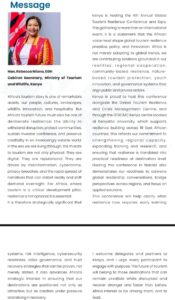
The conference also advanced Kenya-Jamaica tourism cooperation through the renewal of a Memorandum of Understanding (MoU).
This agreement strengthens collaboration in marketing, destination development, human resource training, mutual investments, and knowledge sharing. It encourages private sector engagement, including participation in each other’s exhibitions, and covers areas such as beach management, cultural and heritage tourism, cruise and air connectivity, sustainable practices, and building resilience against crises.
The renewed MoU aims to deepen friendship and practical cooperation between Kenya and Jamaica, positioning tourism as a key driver of growth and employment.
The Nairobi conference demonstrated a clear global commitment to preparing the tourism sector for challenges while transforming them into opportunities.
With the Nairobi Declaration in place, it sets a path for continued efforts toward a stronger, more resilient, and sustainable tourism industry worldwide, ensuring that tourism can thrive even in the face of uncertainty.