
The Kenyan government has taken a major step toward reshaping how the country finances its development after the Cabinet approved the creation of a Ksh5 trillion National Infrastructure Fund.
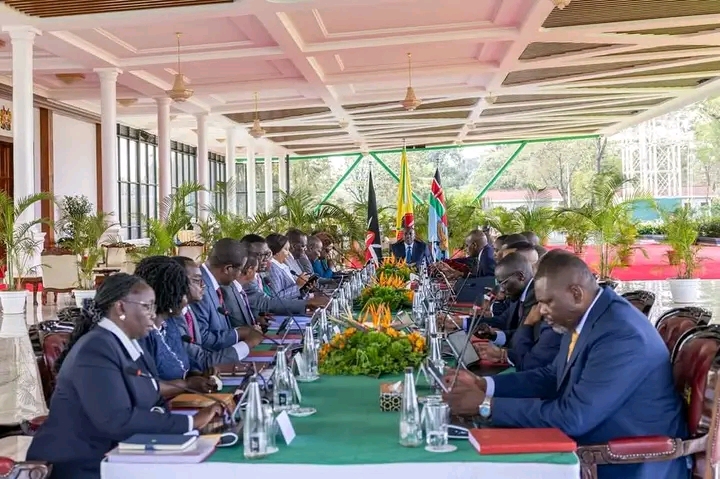
The decision was made during a Cabinet meeting chaired by President William Ruto at State House, Nairobi, and communicated through a Cabinet dispatch released on Monday, December 15. The move signals a shift in how the government plans to support economic growth and place the country on a steady path toward becoming a first-world economy.
The National Infrastructure Fund is expected to become a key pillar in funding major development projects across the country. According to the Cabinet, the fund will be registered as a limited liability company, allowing it to operate with flexibility while still remaining aligned with government priorities.

Photo Courtesy
Its main role will be to mobilise and deploy large amounts of capital into high-priority infrastructure projects that are essential for long-term economic progress.
The government says the fund will focus on sectors that have a strong impact on economic activity and daily life.
These include roads, energy, transport, and other critical areas that support trade, investment, and job creation.
The government hopes to improve efficiency, reduce bottlenecks, and support faster economic growth across different regions of the country.
Alongside the infrastructure fund, the Cabinet also approved the establishment of a Sovereign Wealth Fund. This move is part of a plan to strengthen Kenya’s financial position and reduce heavy dependence on borrowing and taxation.
The Sovereign Wealth Fund is expected to help the country manage its resources more sustainably while building long-term financial stability.
One of the key differences between the new approach and past funding models is how money will be raised.

Photo Courtesy
Traditionally, many infrastructure projects have relied heavily on taxes and public debt.
Under the new plan, the government intends to use alternative financing methods that reduce pressure on taxpayers.
These methods include tapping into domestic capital, selling mature public assets, leveraging national savings, and attracting foreign investors through capital markets.
The Cabinet believes this model will unlock large-scale financing that has been difficult to achieve through conventional means.
By selling or leasing mature public assets that are already generating stable returns, the government can raise funds without increasing taxes or borrowing. At the same time, attracting private and foreign investors is expected to bring in expertise, efficiency, and additional capital.
Officials say the National Infrastructure Fund will also help align government financial resources with national development priorities. Instead of spreading funds thinly across many projects, the fund will allow for more focused and sustained investment. This approach is expected to improve project planning, execution, and long-term impact.
The Cabinet’s approval of the Ksh5 trillion National Infrastructure Fund and the Sovereign Wealth Fund marks a significant policy shift. The government is signaling its intention to move away from short-term solutions and toward a more structured and sustainable financing model.
If well managed, the new funds could play a major role in supporting development, easing the burden on taxpayers, and setting Kenya on a more stable economic path for the future.