

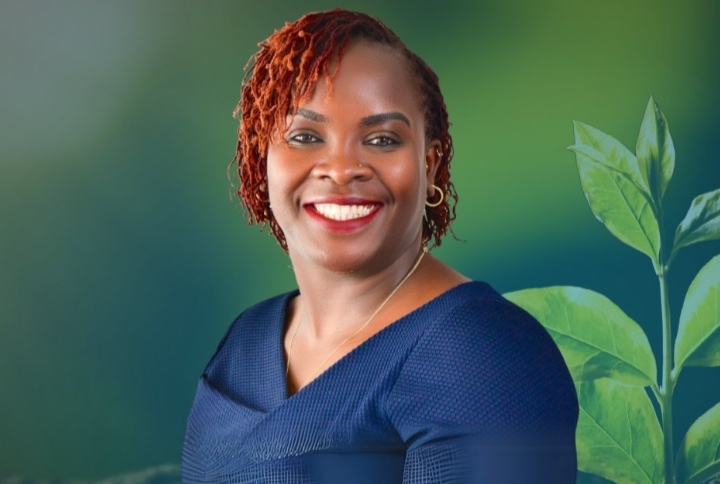
Karen Basiye, the Director of Sustainable Business, Social Impact, and Foundations at Safaricom, has recently been mentioned in online claims about how funds are managed at the Safaricom Foundation.
These claims appeared mainly in mid-February 2026 on social media and accuse senior managers, including Basiye, of taking part in fund misuse, diversion of money, and even money laundering. The posts say that large sums meant for education, health, and economic support projects were wrongly handled.
Most of these accusations started and spread on X, where several posts repeated similar messages.
One popular account described the issue as a “massive” problem and claimed there were serious failures in oversight at Safaricom. Other users shared and repeated these claims, tagging the company’s official accounts and saying that billions of shillings under the foundation’s 2023–2026 plan had been misdirected.
Some posts suggested that Basiye was under pressure or investigation because of alleged corruption in development work.
When the claims are examined more closely, there is no clear proof to support them. There have been no official statements, investigations, or audit reports confirming these accusations.
Bodies such as the Ethics and Anti-Corruption Commission have not announced any probe linked to Basiye or the Safaricom Foundation.
Mainstream news outlets, company reports, and public records also do not show evidence of a confirmed scandal. Most of the information online traces back to the same social media posts and blog-style summaries that repeat unverified wording without adding new facts.
Karen Basiye’s career shows a long record of work in sustainability and social impact. She has more than 15 years of experience in environmental management and corporate responsibility.
In her role, she has helped align Safaricom’s work with global development goals, including digital access, climate action, and community support. Her approach has focused on building systems that combine business success with social benefit.
In January 2026, Basiye received international recognition when she was named the Schwab Foundation Corporate Social Innovator of the Year, an honor linked to the World Economic Forum through the Schwab Foundation.
This award recognized her leadership in promoting responsible business practices and social innovation in the telecom sector. It also reflected the impact of programs that support underserved communities, including work connected to the M-PESA Foundation.
Her work has involved projects that improve access to education, healthcare, and income opportunities. Examples include support for digital health services, tools for farmers, and programs that help communities adapt to economic and environmental challenges.
She also holds advanced academic qualifications in environmental science and policy, which have guided her practical work in sustainability.
The nature and timing of the online attacks suggest they may be driven by reasons other than proven facts.
In Kenya’s active online space, influential accounts sometimes spread claims for attention, personal motives, or to damage reputations. Such campaigns often rely on repetition instead of evidence and can unfairly target people in visible leadership roles.
Unproven accusations can cause real harm by distracting from genuine accountability and damaging trust without cause. Safaricom has governance systems, risk controls, and reporting processes in place, and any real concerns about fund management should follow formal and legal channels.
Karen Basiye’s work continues to show a focus on ethical leadership and social good. Public discussion is strongest when it is based on facts and transparency, not rumor, and leaders deserve fair treatment grounded in evidence.