
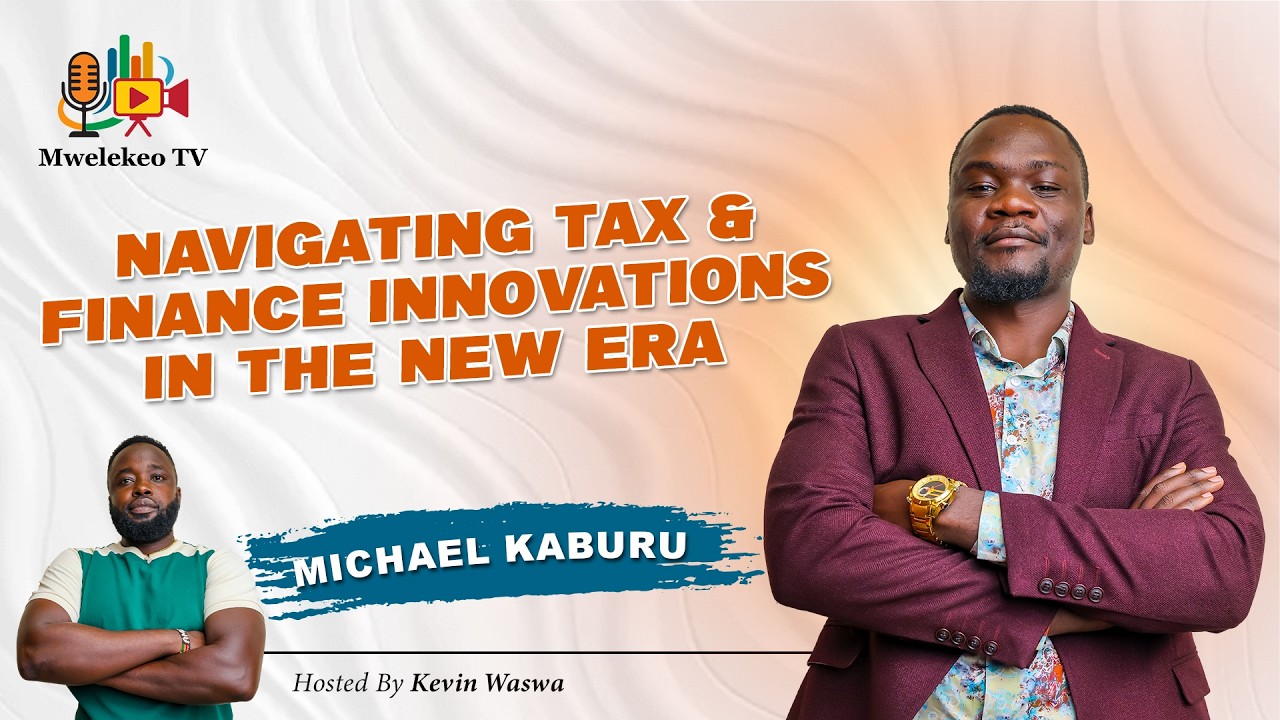
Artificial intelligence is changing how people work in finance and taxation, and that was at the center of a recent discussion on Mwelekeo TV, where Mike Kaburu shared how technology is creating new opportunities for professionals, students and businesses.
Drawing from his background in economics, statistics, software engineering and data analytics, Mike explained how combining traditional knowledge with digital skills is becoming important in today’s changing job market.
Mike spoke openly about how his journey began long before working in tax technology. While still in university, he had to find ways to support himself and cover daily expenses. Instead of waiting for employment after graduation, he ventured into small businesses, including selling laptops and trying drop shipping through social media platforms.
He said those early hustles taught him how to solve problems, build trust with suppliers and look at challenges as opportunities. That entrepreneurial mindset, he noted, has remained useful throughout his career.
In line with the previous Mwelekeo Insights surveys, the conversation also reflected a growing trend showing employers increasingly value people who combine industry knowledge with digital capabilities. Mike’s own career path supported that point. He shared how joining a global firm like KPMG in tax technology was made possible not only by academic qualifications, but also by presenting extra skills that made him stand out.
Even without long years of experience, he positioned himself as someone ready for the future of work.
He encouraged students to start planning their careers while still in school. According to him, a degree alone may not be enough in a competitive market. He urged young people to join student associations, take leadership roles, and learn practical skills beyond the classroom.
These steps, he said, help build confidence and make graduates more adaptable.
On finance and tax, Mike explained that the basics remain the same managing income, expenses, profits and compliance. What has changed is how technology is making the work faster and smarter.
He pointed to how tax administration has moved beyond manual systems, with tools such as automated invoicing, real-time reporting and digital platforms helping improve compliance.
Artificial intelligence, he said, is pushing this even further. Tasks that once took many hours can now be completed much faster. Professionals can use AI tools to review contracts, analyze large sets of data and identify risks earlier.
In finance, this can improve decision-making and help businesses respond before problems grow. In tax work, it can support better handling of obligations such as VAT and withholding taxes.
Mike was clear that technology alone is not enough. One major challenge is ensuring people know how to use these tools well. Some businesses, especially smaller ones, may struggle with costs or lack trained staff. He stressed that the quality of data matters, repeating the principle that poor input leads to poor results. In his view, AI is only as useful as the information fed into it.
Mike believes many routine tasks in finance will continue becoming automated over the next several years. But rather than replacing professionals, he said the work will shift toward oversight, strategy and interpretation. As technology handles repetitive tasks, people may move into roles focused on analysis and decision-making.
He also noted that opportunities could grow in sectors beyond finance, including agriculture and other industries where digital tools can improve productivity. For young people and job seekers, he advised taking advantage of affordable or free learning platforms to build skills in analytics, coding and emerging technologies.
His message to businesses was equally practical. Embracing modern tools can help improve compliance, reduce errors and avoid costly penalties. For individuals trying to build careers or side incomes, he said the same digital tools can open doors if used creatively.
The discussion made clear that adapting to change is becoming essential. Mike Kaburu’s story, from student hustles to advising on tax transformation, offered a practical example of how combining knowledge, technology and curiosity can create new paths in a changing world.