

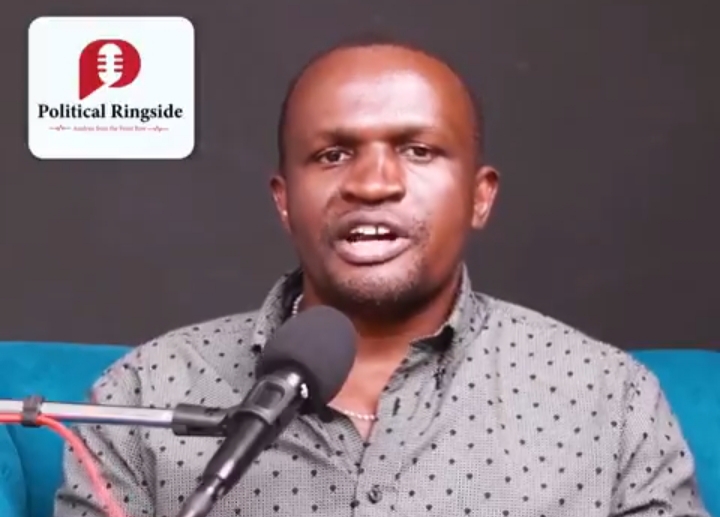
Political Ringside, the show known for open political discussions, recently featured a conversation that focused on why politics cannot work well when many people are left out. During the discussion, political strategist Ndege Serikal shared lessons from his long journey in student leadership and activism.
He explained how universities, especially in Kenya, have played a major role in shaping leaders and pushing for the inclusion of young people in national politics.
Ndege Serikal, also known as Frederick Okundi Serikal or Bishop, spoke about his time at the University of Nairobi where he served in the Supreme Council of University Students between 2008 and 2016. His leadership journey was not easy. He faced eight suspensions and two expulsions because of his firm stand on student rights and academic freedom.
Even before joining the University of Nairobi, he had been expelled from St. Paul’s University after leading protests over visa problems affecting international students. Despite these setbacks, he remained committed to education and activism, believing universities are important spaces for growth, debate, and leadership training.
He explained that before the 2010 Constitution, student leaders were often treated as enemies by university management and the government. Campuses like the University of Nairobi were known for free thinking and leadership, which attracted harsh reactions.
Students were suspended, expelled, arrested, and in some cases killed for speaking out. According to Serikal, students stepped in to challenge injustice when opposition politics was restricted. They protested international and local events and supported leaders during difficult political times, even though this exposed them to serious danger.
Serikal highlighted the role of student activism in producing national leaders. He mentioned figures such as James Orango and other activists who later took up leadership roles in public life. He also spoke about friendships formed during campus politics, including his association with Babu Owino. Through these experiences, student leaders learned how to organize people, handle pressure, speak to the media, and survive tough political environments.
One major concern he raised was tokenism. He explained that young people are often given small roles without real power, a practice that began during colonial times and continues today. Youth are mobilized to chant slogans or attend rallies but are rarely involved in serious decision making.
Serikal encouraged young people to use even limited spaces to speak boldly and demand inclusion.
He compared activism during his time to the Gen Z protests of 2024. He noted that today’s youth are fearless, inclusive, and creative. They use social media to organize and communicate and include women, persons with disabilities, and different social groups. While older leaders admire their courage, they sometimes struggle to accept their bold methods.
To improve inclusion, Serikal advised leaders to involve young people early in decision making through forums in universities, town halls, and public spaces.
He urged youth to reject fake representation and focus on voting, learning new skills, and understanding the Constitution. He also raised concerns about heavy taxes that affect young entrepreneurs and highlighted challenges faced by women in leadership, such as violence, lack of funding, and online abuse.
Serikal emphasized that youth are not just future leaders but active participants today. He encouraged continuous engagement, learning, and accountability to build a political system where everyone has a real voice.