
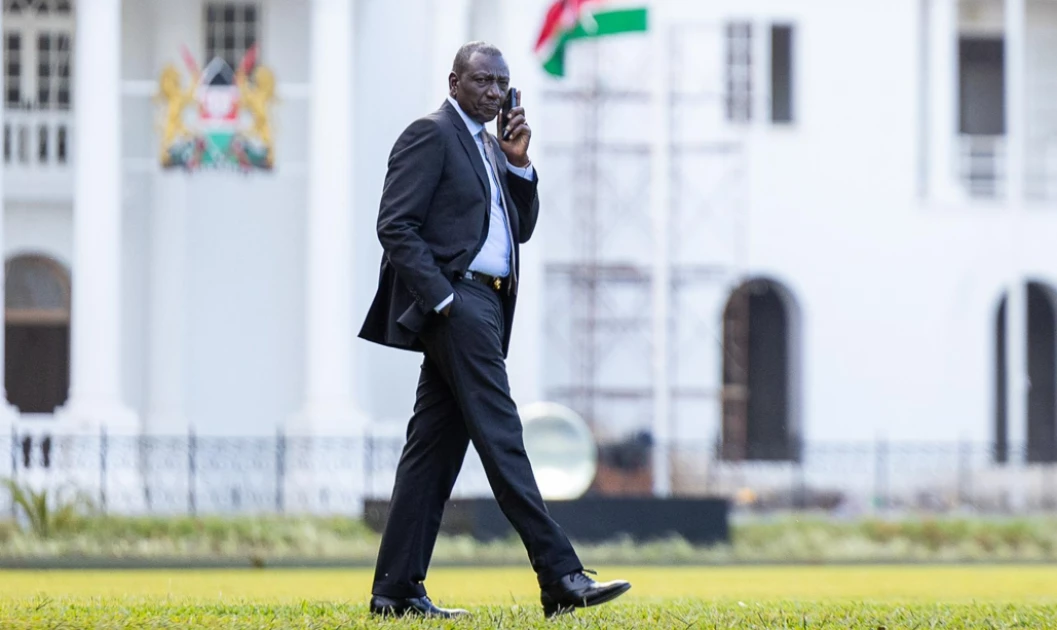
Government spending priorities have come under sharp focus after new Treasury figures revealed that State House has already spent almost all its recurrent budget halfway through the 2025/2026 financial year, despite the country facing a serious revenue shortfall.
Data published by the National Treasury on December 19 shows that between July and November, State House received Ksh7.6 billion, which is about 99.7 percent of its total recurrent allocation for the entire financial year.
This means that funds meant to run State House for twelve months were released and largely used within just six months.
The disclosures have raised concerns about fiscal discipline and whether austerity measures promised by the government are being applied equally.
This heavy spending comes at a time when the government is struggling to raise enough revenue. Treasury Cabinet Secretary John Mbadi has openly admitted that collections are far below target. During the period under review, the government had projected to collect Ksh4.43 trillion but managed only Ksh1.81 trillion. This gap has left the Treasury under pressure to fund government operations while managing growing obligations.
Tax revenue, which forms the largest share of government income, performed poorly. Against an expected Ksh2.63 trillion, only Ksh909.8 billion was collected. Non-tax revenue also failed to meet expectations, with Ksh42.2 billion collected compared to a target of Ksh127.6 billion.
These figures clearly show the scale of the financial strain facing the government and the need for careful and fair spending decisions.
Despite this situation, State House appears to have been protected from the spending cuts affecting other institutions. The early release of almost the entire State House budget contrasts sharply with the treatment of other government offices.
For example, the office of the President received Ksh1.5 billion in the first six months out of an annual allocation of Ksh4.5 billion, meaning only about a third of its budget was released during the same period.
The office of the Deputy President received Ksh2.6 billion out of an annual estimate of Ksh2.9 billion, while the office of the Prime Cabinet Secretary received just Ksh154 million from an allocation of Ksh363 million.
These differences point to uneven budget execution within the executive, raising questions about how priorities are set.
Beyond top offices, critical sectors that directly serve the public are also feeling the strain. Institutions such as the National Police Service, the Ministry of Defence, and county governments have reported slower and limited disbursements.
These are areas that support security, public safety, and basic services, yet they continue to operate under financial pressure.
President William Ruto has repeatedly promised to reduce government spending and cut unnecessary costs, especially within his administration. However, the near-total spending of the State House budget halfway through the year undermines these promises.
To many Kenyans, the figures suggest that austerity is being applied selectively.
For citizens already struggling with high taxes, rising living costs, and a slow economy, the Treasury disclosures deepen public frustration. They create the impression that ordinary people are being asked to make sacrifices while the highest office in the land remains largely untouched by the country’s financial difficulties.