

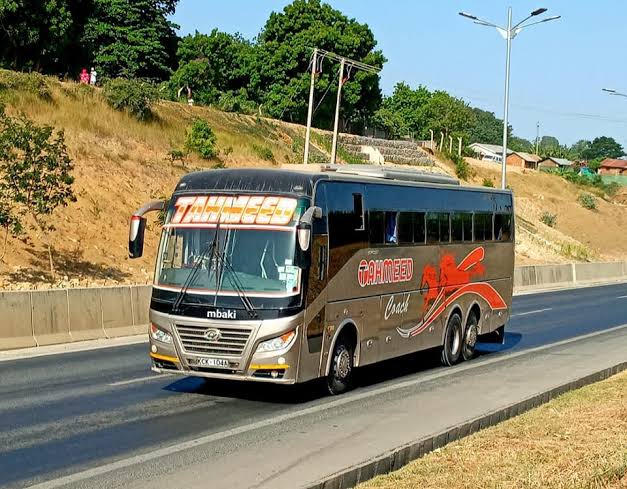
Many Kenyans rely on long–distance buses to move from one town to another, and Tahmeed Coach has always been one of the well-known players in that space.
The company carries thousands of passengers every day across major routes, connecting cities such as Nairobi, Mombasa, Kisumu, Dar es Salaam, and even Kampala. Because of this wide network, many travellers see it as a convenient choice whenever they plan long trips. But the trust that passengers place in the company was tested recently after an incident that has now drawn national attention and sparked a major conversation online.
The trouble started when a group of passengers arrived at the company’s booking office, expecting to board a bus they believed matched the quality they had paid for.
As they prepared for their journey, some of them noticed issues with the bus they were directed to. They complained that the vehicle looked old and uncomfortable, far from what they had been promised at the time of booking. Their concerns, according to their own accounts, were not taken seriously.
They say the staff brushed off the complaints and did little to address the situation. What followed was even more upsetting for the travellers, as they claim they were left at the booking office late into the night without clear communication on what would happen next.
Videos recorded by passengers began circulating across social media, showing groups of stranded travellers sitting or standing outside the office long after their scheduled departure time. These videos sparked a wave of reactions across different platforms.
On X, Facebook, TikTok, and WhatsApp, Kenyans debated who was to blame. Some people strongly supported the passengers, arguing that a company handling millions of shillings in customer payments should always meet its obligations and deliver the service people pay for.
They felt that if travellers were shown a certain type of bus while booking, then the company should provide the same quality when it is time to travel.
Others took a different view, saying passengers may not always understand operational challenges that bus companies face. These individuals pointed out that sometimes mechanical issues, last-minute changes, or limited fleet availability can force companies to make difficult decisions. Still, even those offering this defence agreed that communication from the company should have been handled in a better way.
They argued that informing passengers early, explaining the situation clearly, and offering alternatives would have reduced the tension and prevented the situation from turning into a public scandal.
The incident continued to spread online as more people came across the videos. Many were surprised that a company as established as Tahmeed could allow such confusion to reach this level. People noted that customer service plays a big role in transport, especially for long journeys where comfort and safety are important.
By morning, the story had reached thousands, and the mixed reactions showed how divided the public felt. What was clear across all discussions is that travellers expect honesty, consistency, and respect from companies they trust with their journeys, and this incident has put a spotlight on the need for bus operators to communicate clearly when things go wrong.